
Review · SPEYSIDE TOURS
Elgin: In and out the Dusty Closes
Elgin’s narrow closes conceal hard truths. This two-hour walk through Moray’s old alleyways looks past grand buildings and into everyday life, from water carrying and urban livestock to disease control and strict rules for women. I like the focus on ordinary people and the chance to see original details dating from the 1600s. I also like that the tour deals with awkward subjects, including public punishment and the penalties imposed on wives who disobeyed their husbands. The main consideration is the uneven ground and potentially changeable weather, so this is a walking tour in the proper sense.
At $21 per person, the experience offers a useful history lesson at a reasonable price, especially if you want more than a quick look at Elgin Cathedral or the High Street. You should be comfortable with frank stories about poverty, illness, religious shame, and social control. The route is described as mostly wheelchair-friendly, but historical alleyways can still be difficult in places.
In This Review
- Key points about Elgin’s Dusty Closes
- Why Elgin’s closes tell a different story
- Entering the closes and reading the old stone
- Water, livestock, and the work of staying alive
- Epidemics, bilious fever, and crowded homes
- Women’s work, widowhood, and restricted choices
- Reading, religion, and the use of shame
- The Scold’s Bridle and public punishment
- What the two-hour format means for you
- Is $21 good value for Elgin?
- Who should book this walk?
- Should you book Elgin: In and Out the Dusty Closes?
- FAQ
- Where does the tour meet?
- How long does the tour last?
- How much does the tour cost?
- Which languages are available?
- Is the tour wheelchair accessible?
- What should I wear?
- Are pets allowed?
- Are meals and drinks included?
- Is transportation to the meeting point included?
- Can I cancel for a refund?
Key points about Elgin’s Dusty Closes
- Original 1600s details: Look closely at surviving features in the old alleyways and picture how the closes functioned as homes, workspaces, and routes through town.
- Life before plumbing: Learn about Elgin’s surviving street tap and the daily effort required to collect water.
- Epidemics in cramped lanes: Hear how the town responded to bilious fever in the 1840s and earlier outbreaks when crowded housing made separation difficult.
- Women’s lives under strict rules: Follow stories of housewives and widows, including ways women earned money when formal work was restricted.
- Crime and public shame: Hear about the Scold’s Bridle and other punishments used to silence people, particularly outspoken women.
- Practical two-hour format: The tour is in English or Spanish, costs $21, and allows free cancellation up to 24 hours before departure.
Why Elgin’s closes tell a different story

Elgin has been a Royal Burgh since the 1100s, but this walk is less concerned with official titles than with the people who lived behind the main street. The closes were narrow passages leading between buildings, homes, yards, and working spaces. They were not just shortcuts. They were part of the town’s housing system.
That distinction matters. A grand church or civic building can show you what a town valued in public. The closes show you how people managed private life when homes were crowded, streets were rough, and modern services did not exist.
I like this approach because it puts daily habits at the center. You are asked to think about where water came from, how animals fit into an urban home, how families coped with sickness, and what happened when social rules were broken. These details give Elgin’s past a human scale.
The route covers several centuries, from the medieval town through the 1600s, 1700s, and 1800s. That long view helps you see change, but it also shows how stubborn some problems remained. Better buildings did not instantly bring comfort, privacy, or equal rights.
A few more Scotland days worth comparing
- Aberlour: Cardhu Whisky Distillery Tour and Tasting
★ 4.9 · 14 reviews - Elgin: High Street Graveyard Walking Tour
★ 5.0 · 4 reviews - Elgin: Witch Trials Tour
★ 5.0 · 3 reviews
Entering the closes and reading the old stone
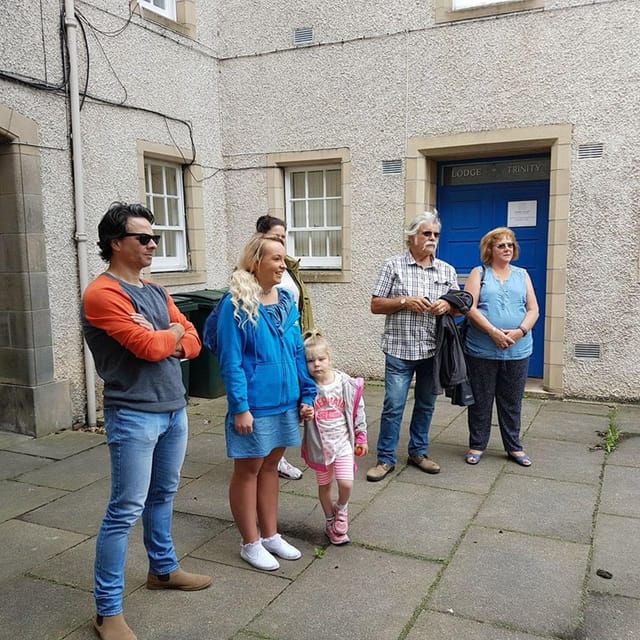
The walk begins at a stone pillar with a few steps at the base and two benches nearby. This is the meeting point, so arrive with enough time to identify it before the group sets off. The benches may be useful if you need a brief rest before walking.
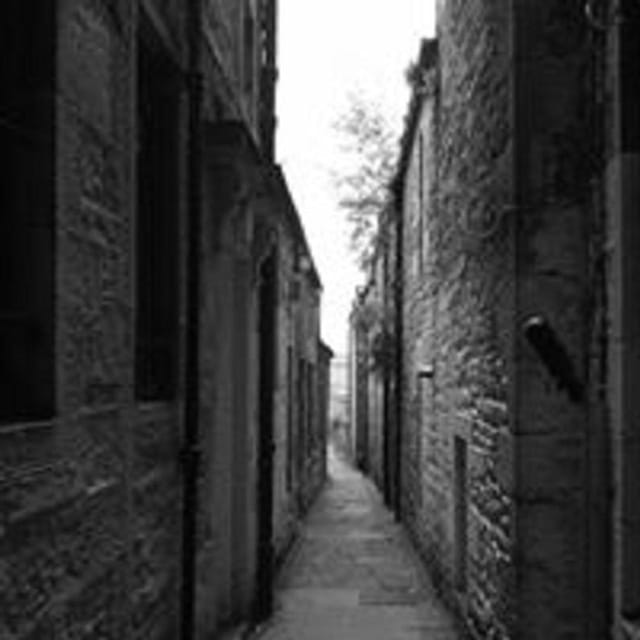
From there, the guide leads you into the historic alleyways. The appeal is not grand scenery. It is the close view of old stone, tight passages, and architectural details that can be easy to miss when you walk through Elgin on your own.
The surviving features from the 1600s are especially important. They help anchor the stories in actual places rather than leaving them as a list of dates. You may find yourself looking at doorways, walls, passage widths, or building arrangements with new questions: Who used this space? Was it a home, a work area, or a shared route? How much privacy could anyone expect?
The close setting also makes the social history easier to understand. These were places where people lived in close contact with neighbors, animals, smells, noise, and waste. The narrow lanes were practical, but they could also make disease and conflict harder to contain.
Wear comfortable shoes. Even with a mostly wheelchair-friendly route, the age of the area means surfaces may be uneven, and a few steps are part of the meeting point. Weather can change quickly in Scotland, so a waterproof layer is sensible.
Water, livestock, and the work of staying alive
One of the tour’s most useful themes is life before plumbing. Modern visitors often think of water as something that arrives when a tap is turned. In old Elgin, getting water was a daily task that took time, strength, and planning.
The town’s only surviving street tap gives this subject a physical connection. It represents more than an old fitting. It points to the repeated work of collecting water for drinking, washing, cooking, and cleaning. A household could not simply postpone the task because the weather was bad or someone was ill.
This is where the tour should be particularly helpful for families. Children may understand old buildings more easily when the guide connects them to a simple question: How would you get water home if there were no pipes? The answer quickly turns architecture into a practical problem.
The story of urban livestock adds another useful layer. Before supermarkets and modern food distribution, families needed animals close at hand. The closes and their adjoining plots had to serve several purposes at once, including housing, work, storage, and animal keeping.
That arrangement could help a family survive, but it also made crowded areas less clean and less pleasant. You will hear about the clever use of narrow urban spaces, while also getting a sense of the burdens that came with them. The past was not charming simply because it was old.
Epidemics, bilious fever, and crowded homes
The tour also examines how Elgin dealt with epidemics. The reference to bilious fever in the 1840s gives the discussion a particular local focus, while earlier plagues provide a wider setting.
Disease management was difficult in any town, but cramped closes created special problems. Families lived near one another, water collection brought people together, and waste could affect shared spaces. The idea of keeping your distance was far harder when several people shared small homes and narrow passages.
You will hear how the town attempted to respond to outbreaks. The important point is not to judge the past by modern medical standards. It is to understand the limited choices available to local authorities and families.
I appreciate that this subject connects public health with housing. Epidemics are often taught as dates and death counts, but crowded living conditions help explain why illness spread and why certain measures were hard to enforce. The closes make that connection visible.
This part may feel sobering. The tour deals with fear, sickness, and poverty rather than offering a purely picturesque look at Elgin. That is a strength if you want honest local history, though it may not suit someone seeking a light stroll with amusing anecdotes only.
A completely different kind of day out:
- The World Famous Underground Ghost Tour
★ 4.5 · 9,272 reviews - Underground Vaults Walking Tour in Edinburgh Old Town
★ 4.5 · 8,506 reviews - Loch Ness, Scottish Highlands, Glencoe and Pitlochry Tour
★ 5.0 · 6,854 reviews - Loch Ness & Highlands Small-Group Tour from Edinburgh with Cruise
★ 4.5 · 6,022 reviews
Women’s work, widowhood, and restricted choices
The section on women is one of the strongest reasons to choose this walk. Accounts of old towns often focus on merchants, officials, ministers, and men who held property. This tour gives more attention to housewives and widows who kept families going with fewer legal and economic choices.
For a widow, earning enough to support a household could be difficult when women were barred from many forms of formal employment. The tour explains how women used less official ways to earn money. These underground economies were not necessarily dramatic or criminal. They could simply be practical methods of selling goods, providing services, or making use of skills when accepted work was closed to them.
That focus changes how you read the closes. A passage that looks like a route between buildings may also have been part of a woman’s working world. Homes were not only places to sleep. They could support small-scale trade, domestic production, and family survival.
The experience also addresses the life of a housewife and the expectations placed on her. The word housewife can sound comfortable to modern ears, but the role involved heavy labor and strict social judgment. Cooking, cleaning, collecting water, caring for children, and managing supplies all took time, yet the work often carried little public status.
The stories about obedience are harder. You will hear about penalties for saying no to a husband and the wider rules used to control women’s behavior. The tour does not treat these customs as quaint curiosities. It presents them as part of a system in which family authority, religion, and public opinion could limit a woman’s freedom.
Reading, religion, and the use of shame
Another striking part of the walk concerns religious shame and the rules around ordinary human behavior. The discussion includes strict attitudes toward natural cycles and even the simple act of reading.
These details show how social control worked beyond the courtroom. A person did not need to be arrested to suffer punishment. Reputation, gossip, religious pressure, and public humiliation could all shape behavior.
The subject of reading is especially telling. Access to books and the freedom to read were not treated as neutral matters in every period. The tour uses this and other examples to show how authorities and communities tried to regulate thought, conduct, and personal choices.
You should expect plain and sometimes uncomfortable discussion. The material is not presented as a celebration of old customs. It helps explain why life in the closes required more than physical endurance. People also had to manage judgment from neighbors, religious leaders, spouses, and officials.
The Scold’s Bridle and public punishment
Crime and punishment form another major thread. The Scold’s Bridle is the most memorable example, a device associated with the public humiliation of women who were judged to be too outspoken or disruptive.
The point is not the object alone. It is the warning built around it. Public punishment made an example of one person in order to frighten others into obedience. In a tight community, humiliation could affect a person’s family, work, and standing long after the punishment ended.
The tour also discusses other forms of public discipline and social penalties. These stories can be uncomfortable, but they are valuable because they show that law and custom did not affect everyone equally.
I would pay close attention here if you are interested in gender history or the way communities enforced behavior before modern ideas of individual rights became more widely accepted. The material adds depth to the rest of the tour. Water, housing, disease, and work all mattered, but so did the rules governing who could speak and who had to remain silent.
What the two-hour format means for you
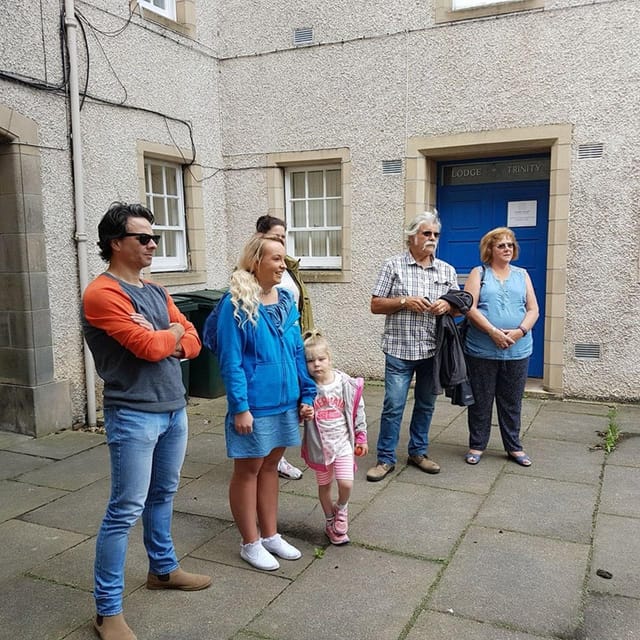
The advertised duration is two hours, with availability depending on the starting time you select. That is long enough to build a connected story without taking up an entire day in Elgin.
A guided walk also gives this experience an advantage over exploring the closes alone. Without a guide, you can see the stonework but miss the reason it matters. The live guide provides the context linking architecture to family life, health, work, and punishment.
Tours are offered in English and Spanish. That makes the experience more useful for mixed-language groups, although you should confirm the language available at your chosen time.
The route is described as wheelchair accessible and most areas are wheelchair-friendly. At the same time, you should prepare for uneven surfaces in historical areas, and the meeting point has a few steps at the bottom of the stone pillar. If you use a wheelchair or have limited mobility, check the specific route and starting arrangements before booking.
Pets are not allowed, though assistance dogs are permitted. Meals, drinks, transportation to the meeting point, and personal expenses are not included, so plan this as a self-contained walking activity.
Is $21 good value for Elgin?
At $21 per person, I consider this good value if you care about local history and prefer a guided experience to a simple self-guided walk. The tour lasts about two hours and covers several subjects: housing, water, livestock, epidemics, women’s work, religion, and punishment.
Its value comes from interpretation rather than expensive admissions or transport. You are paying for the guide’s explanation of places that might otherwise look like old stone lanes. That makes the price easier to justify for first-time visitors who want Elgin to make sense.
The price may feel less worthwhile if you want a broad tour of all Moray attractions. This experience concentrates on the closes and the people who lived in them. It does not include meals, transport, or entry to other sights.
I would pair it with separate time in Elgin rather than expecting it to cover the whole town. The walk gives you a social history framework. You can then look at other historic sites with a better idea of how the town worked behind its public face.
Who should book this walk?
I would recommend it to you if you enjoy:
- Local history tied to real streets and buildings
- Stories about working families rather than only famous figures
- Women’s history and changing social rules
- Public health, housing, and life before modern services
- Short walking tours with a serious edge
- Small details that reward close observation
Families with older children may find the water, livestock, and epidemic stories easy to discuss. Some punishment and gender-related subjects are mature, so parents should decide if the tone suits their group.
It is also a good choice for visitors who have already seen Elgin’s major sights and want a different angle. The route should appeal less to anyone who dislikes uneven ground, frank historical subjects, or walking in uncertain weather.
Should you book Elgin: In and Out the Dusty Closes?
Book this tour if you want Elgin explained through its narrow lanes and ordinary households. The strongest parts are the surviving 1600s details, the story of the street tap, the practical account of epidemics, and the attention given to widows and housewives.
At $21, the two-hour format is a sensible use of time and money, especially when you are already in Elgin. Wear good shoes, bring weather protection, and expect history that is sometimes grim rather than decorative. If you prefer a quick scenic stroll, choose another activity. If you want to understand how people actually lived, worked, suffered, and resisted in old Elgin, this walk earns its place in your plans.
FAQ
Where does the tour meet?
The meeting point is by a stone pillar with a few steps at the bottom and two benches nearby.
How long does the tour last?
The tour lasts about two hours. Check availability for the specific starting times.
How much does the tour cost?
The listed price is $21 per person.
Which languages are available?
The live tour guide service is available in English and Spanish.
Is the tour wheelchair accessible?
The tour is described as wheelchair accessible, and most routes are wheelchair-friendly. Historical areas may have uneven surfaces, and the meeting point includes a few steps.
What should I wear?
Wear comfortable walking shoes and be prepared for varying weather conditions.
Are pets allowed?
Pets are not allowed. Assistance dogs are permitted.
Are meals and drinks included?
No. Meals and drinks are not included in the tour price.
Is transportation to the meeting point included?
No. You must make your own way to the meeting point.
Can I cancel for a refund?
Yes. You can cancel up to 24 hours in advance for a full refund.
Just added in Scotland
- Northern Islands RIB Tour★ 5.0 · 15 reviews
- Highland Whisky Distilleries Shore Trip from Invergordon Cruise Port★ 5.0 · 2 reviews
- Tours from Invergordon Port★ 5.0 · 1 review
- ULLAPOOL PORT Cruise Ship Tour, Ardvreck Castle, Rocks & More★ 5.0 · 5 reviews
- Full-Day Private Speyside Malt Whisky Trail Tour from Grantown-on-Spey★ 5.0 · 22 reviews
- Guided Walks in Grantown-on-Spey★ 5.0 · 35 reviews
- Explore Glenfinnan – Adults★ 5.0 · 5 reviews
- Glenaladale Cruise – Great for wizard spotting!★ 5.0 · 70 reviews
Speyside Tours, compared.

Aberlour: Cardhu Whisky Distillery Tour and Tasting
Read our review →

Also on these Scottish lists