

Review · SPEYSIDE TOURS
Elgin: High Street Graveyard Walking Tour
History can hide in plain sight. This two-hour walk through Elgin links covered shopping arcades, old stonework, and a graveyard many locals pass without noticing. I like the way it treats the town as more than a collection of attractive buildings. You also get the darker material: a poltergeist that threw fruit and vegetables, illicit trade, and a mass murder case with no hanging at the end.
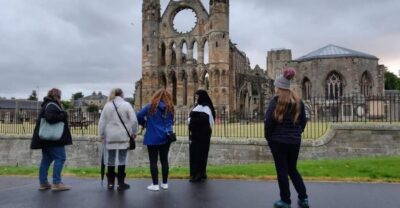
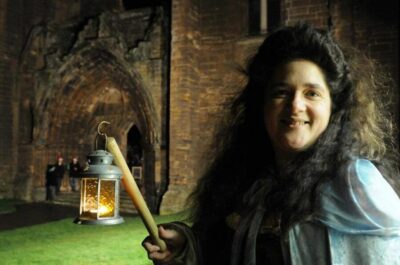
The tour’s other strength is its guide, Lynda, whose enthusiasm and command of Elgin’s past make the stories easy to follow. The main consideration is tone. This is not a gentle architectural stroll, since the route includes grim sanitation stories, prostitution, murder, and supernatural claims. That mix will appeal to curious adults, but it may not suit young children or anyone looking for a purely scenic walk.
In This Review
- Key points to know before booking
- Why Elgin’s High Street rewards a slow walk
- Covered walkways and the old business district
- The Great Mess before modern plumbing
- Reading Elgin’s shops through stonework
- Shambles Wynd and the less respectable side of town
- Elgin’s oldest graveyard, tucked in ordinary sight
- A poltergeist with a very Scottish arsenal
- The mass murder case that ended without justice
- From Elgin to the road to Culloden
- Lynda’s guiding style and the value of a live storyteller
- Who should book this Elgin walk?
- Should you book Elgin High Street Graveyard Walking Tour?
- FAQ
- How long is the Elgin High Street Graveyard Walking Tour?
- How much does the tour cost?
- Where is the meeting point?
- What languages are available?
- Is the tour wheelchair accessible?
- Can I cancel for a full refund?
- Are pets allowed?
Key points to know before booking

- Covered walkways once kept shoppers dry: See the remains of Elgin’s old arcades and learn how status shaped shopping in the town.
- A hidden old burial ground: Visit Elgin’s oldest graveyard, a place many people in town walk past without knowing it is there.
- Stonework acted like a shop sign: Building details helped identify the trade carried on inside.
- An 1820s mosaic survives: The preserved floor adds a close-up look at local craftsmanship.
- The ghost story has a specific setting: Hear about Elgin’s documented poltergeist case, including fruit and vegetables hurled at staff.
- True crime and Culloden connect here: The walk covers a mass murder case and the Hanoverian soldiers’ route toward the Battle of Culloden.
Why Elgin’s High Street rewards a slow walk
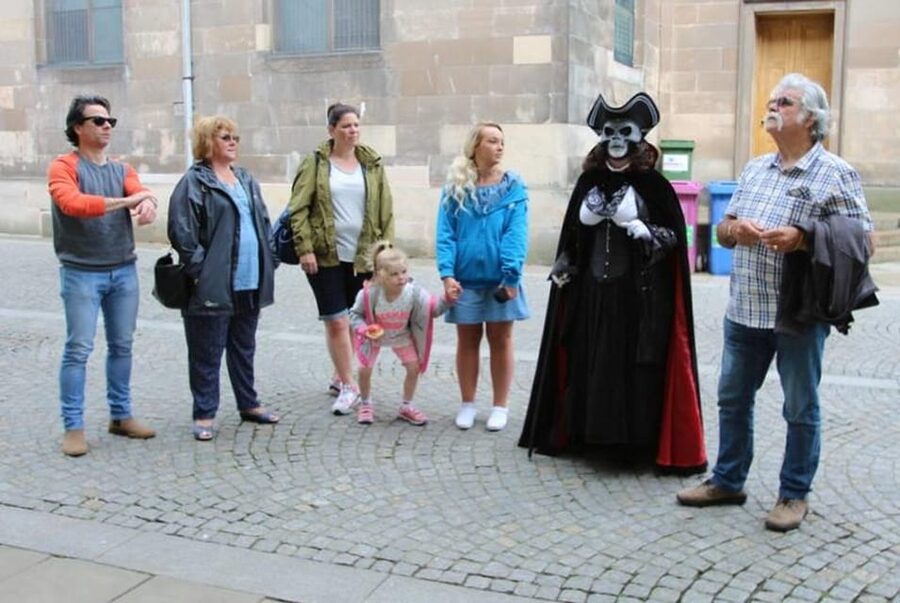
Elgin is easy to treat as a stopping point between better-known Highland destinations. This tour gives you a reason to slow down. The old High Street becomes a record of how people worked, shopped, worshipped, argued, and disposed of their waste long before modern services changed daily life.
I especially like the focus on details beneath eye level. A guide can point out masonry, floor surfaces, alleyways, and fragments that you might otherwise pass without a thought. That makes the walk useful even if you already know something about Elgin, because the town begins to read like a set of clues.
The tour is led in English or Spanish and lasts about two hours. That is enough time for stories to develop without taking up your whole day. At $21 per person, the cost is reasonable if you value a live guide who can explain why a building detail matters rather than simply naming the street.
The meeting point is marked by a stone pillar with a few steps at the bottom and two benches nearby. I would arrive a little early and use those landmarks to get your bearings. Since the experience takes place on town streets and includes a graveyard, comfortable shoes are sensible, even though the activity is listed as wheelchair accessible.
More Walking Tours in Scotland:
- Underground Vaults Walking Tour in Edinburgh Old Town
★ 4.5 · 8,506 reviews - Edinburgh Castle: Guided Walking Tour with Entry Ticket
★ 5.0 · 5,540 reviews - Edinburgh Castle Guided Walking Tour in English
★ 5.0 · 5,214 reviews
Covered walkways and the old business district
One of the tour’s most distinctive subjects is Elgin’s covered walkways. Before modern shopping centers and weatherproof retail streets, these passages let people shop while staying out of the rain. The arrangement also reflected social rank, since the walk describes the arcades as a place where the elite could conduct business in greater comfort.
The remains are not simply an architectural curiosity. They help you picture how the High Street functioned as a working center rather than a traffic route. You can imagine people moving from shop to shop under shelter, with the street outside handling the mess, noise, and weather of ordinary town life.
This is where a guide adds real value. Ruins and fragments rarely explain themselves. Lynda’s role is to connect the physical remains with the people who used them. Her enthusiasm matters here, because the covered passages are easy to overlook if you do not understand what they once provided.
You should not expect a perfectly preserved arcade that you can walk through from end to end. The attraction is in seeing what remains and learning how the pieces fit into the older town. If you prefer large, intact monuments, this part may feel modest. If you enjoy reconstructing the past from small clues, it is one of the walk’s strongest sections.
The Great Mess before modern plumbing
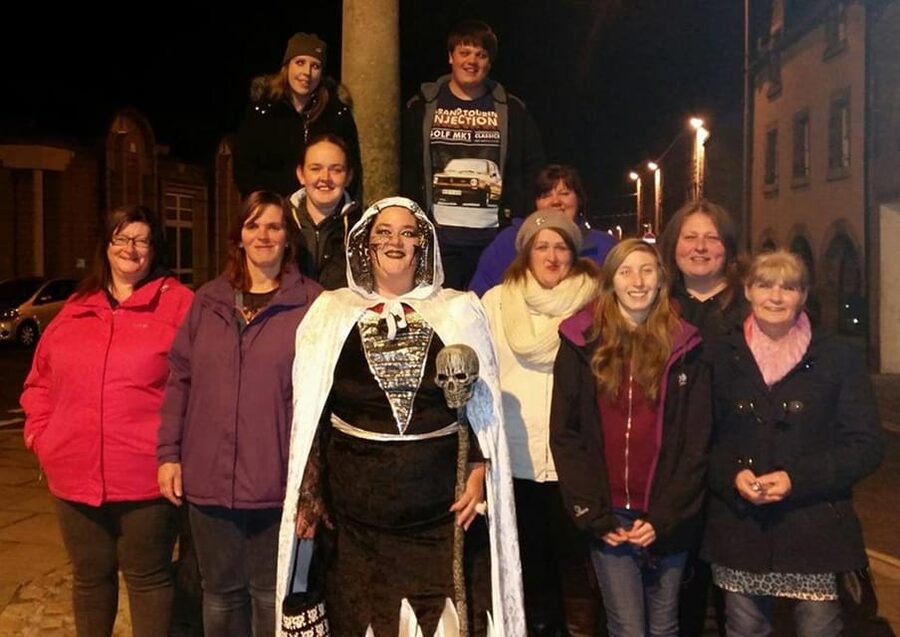
The tour also presents Elgin before sewers and modern sanitation. The phrase Great Mess captures the subject neatly, but the reality was less neat: streets could smell, waste had to go somewhere, and daily life involved conditions that modern visitors may find hard to imagine.
This material gives the rest of the walk a useful human scale. It is easy to admire old stone buildings and imagine a romantic past. The sanitation story corrects that picture. Historic town life included comfort for some, hard work for many, and plenty of unpleasant business in public spaces.
I appreciate this part because it explains why urban improvements mattered. A sewer system is not exciting in the way a cathedral or castle is exciting, but it changed the basic experience of living in town. You come away seeing the High Street as a place shaped by practical problems, not just grand events.
The drawback is clear: the guide paints a vivid picture of the smell and conditions. Anyone sensitive to graphic historical description may want to prepare for a less polished view of Elgin. That honesty is part of the tour’s appeal, but it is not lightweight storytelling.
Reading Elgin’s shops through stonework
A particularly clever part of the walk is the explanation of how stonework could reveal the business inside. Before modern signs and standardized storefronts, masonry and decorative details helped tell people what trade was being carried on.
This turns the town into a visual code. You are not merely looking at old façades. You are learning to ask what a doorway, carving, or pattern might have told an earlier passerby. The architecture becomes practical communication, much like a sign, but built into the structure itself.
That approach is valuable because it gives you something to keep using after the tour. Once a guide shows you how to look for these signs, you may find yourself noticing similar clues elsewhere in Scotland. The walk is not only about receiving facts. It gives you a way to examine historic streets.
The 1820s mosaic floor adds another close-up detail. Its preservation offers a direct connection to the craftsmanship and taste of the period. A floor can seem like a minor feature beside a major monument, but it records how a business or public space was finished and used. I like that the tour gives this small survivor proper attention.
A few more Scotland days worth comparing
- Aberlour: Cardhu Whisky Distillery Tour and Tasting
★ 4.9 · 14 reviews - Elgin: Witch Trials Tour
★ 5.0 · 3 reviews - Elgin: Cathedral Interior Guided Tour
★ 5.0 · 2 reviews - Elgin: Cathedral Exterior Tour
★ 5.0 · 1 review
Shambles Wynd and the less respectable side of town

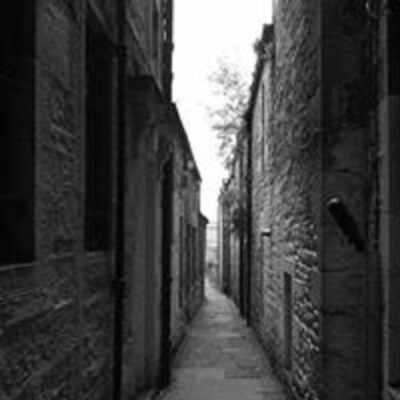
Elgin’s past includes trade that was not openly celebrated. The tour discusses prostitution and the way illicit business operated in the shadows. It also visits Shambles Wynd, an alley with a reputation suited to the darker stories attached to it.
This section helps prevent a sentimental view of old Elgin. Historic streets were places of commerce, but not every transaction was respectable or legal. The narrow lanes and less visible corners offered privacy, and the guide explains how the town’s social life extended beyond official buildings and public ceremonies.
The subject is handled as local history rather than cheap shock. You hear how business was conducted and how these activities fitted into the town’s older layout. That context is more useful than a string of scandalous anecdotes because it shows how geography shaped behavior.
Still, this is not the right tour for someone who wants only architecture and pleasant folklore. The language and stories can be direct. I would recommend it to adults with an interest in social history, crime, and the less tidy side of town life.
Elgin’s oldest graveyard, tucked in ordinary sight
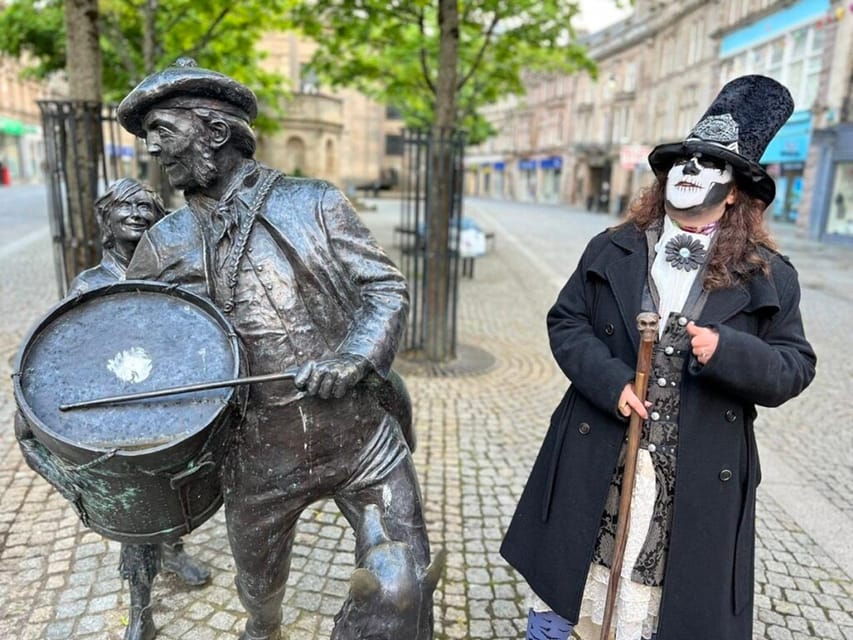
The visit to Elgin’s oldest graveyard is likely to be the most atmospheric part of the route. The site is described as so well hidden that many locals walk past without realizing it is there. That makes the stop feel like a genuine discovery, even though the tour remains in the middle of town.
Old burial grounds can tell you what official histories leave out. Names, stones, dates, and the arrangement of the ground offer evidence of how a community remembered its dead. The graveyard also changes the pace of the walk. After the commercial noise of the High Street and the grim account of public sanitation, you enter a quieter place shaped by memory.
You should keep your expectations practical. This is not presented as a grand cemetery complex with a long list of monumental tombs. Its value comes from age, location, and the fact that it is easily overlooked. A guide’s explanation turns an obscure space into an important part of Elgin’s story.
Because the tour is wheelchair accessible, the provider indicates that the activity can accommodate wheelchair users. The route still includes a meeting point with a few steps at the stone pillar, so you may want to confirm the exact arrangements when booking if access details are important for your party.
A poltergeist with a very Scottish arsenal
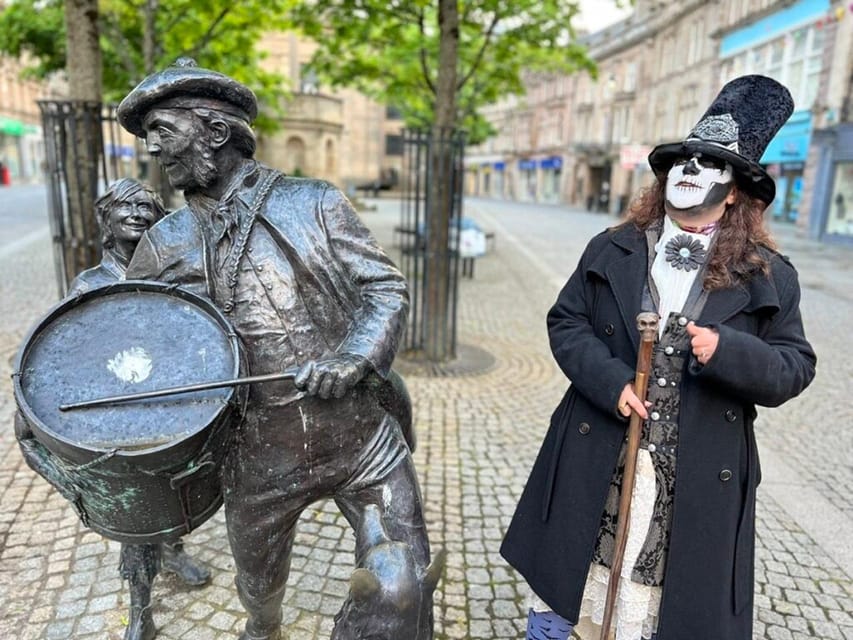
The supernatural portion centers on Elgin’s only documented poltergeist case. The story includes staff being pelted with fruit and vegetables, which gives the haunting an unusual edge. It is unsettling, but also oddly domestic. A ghost armed with produce is harder to forget than a vague tale about cold spots.
The tour presents the case as documented, while leaving room for you to decide what you believe. That balance matters. You can enjoy the story as local folklore, a record of strange events, or a piece of social history showing how people reacted when they could not explain what was happening.
I like the specificity of the account. The fruit and vegetables make the story concrete, and the connection to staff gives it a setting and human context. You are not simply told that Elgin has a ghost. You hear what the spirit was said to do.
The paranormal material also works better because it follows the architectural and social history. By the time you reach the ghost story, you have a sense of the town’s buildings and older businesses. The supernatural tale feels attached to a real place rather than floating free as a generic haunting.
The mass murder case that ended without justice

The tour’s true-crime section covers a mass murderer whose identity was known and whose crimes were solved, yet who never faced the gallows. That unresolved punishment is the point that lingers. It raises questions about law, evidence, power, and the gap between knowing who committed a crime and being able to impose a sentence.
I would not book this walk expecting a full courtroom reconstruction. The information provided promises the shocking outline of the case and its lack of a final execution, not a complete legal history. The value lies in how the story fits into Elgin’s older world of rumor, fear, and limited justice.
This subject also gives the walk a sharper edge than standard town sightseeing. You are asked to consider not only what happened, but how a community lived with the result. That makes the case more than a grim anecdote.
If you are especially interested in true crime, this may be one of the main reasons to book. If murder stories are not your thing, the tour still has enough architecture and urban history to justify the time, but this section may be uncomfortable.
From Elgin to the road to Culloden
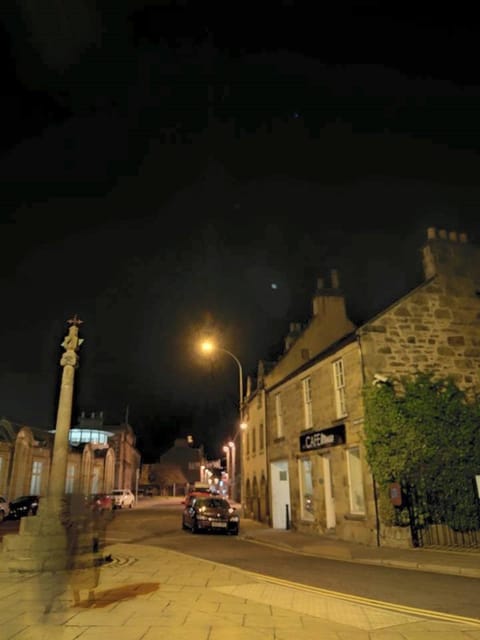
The route also connects Elgin with the Jacobite era by showing where Hanoverian soldiers stood as they marched through town toward the Battle of Culloden. This detail places Elgin within a much larger Scottish story.
The stop is valuable because it makes national history local. Culloden is often discussed as a major battle in a distant setting. Here, you consider the soldiers passing through an actual town, occupying space on the street, and continuing along a route toward the conflict.
You may not get a battlefield-scale military interpretation on this walk. Instead, the focus is on Elgin’s position along the road and what that meant for the town. I find that approach useful because it avoids treating famous events as isolated moments. Armies had to move through communities, and those communities had to live with the consequences.
Lynda’s guiding style and the value of a live storyteller
Lynda is the guide name to remember. Her strength is not just knowing dates and names. She brings energy to the stories and makes the town’s less obvious details easier to notice. That matters on a walking tour where many of the best subjects are fragments rather than grand attractions.
The live format lets you follow the story at street level. You can look at the relevant stonework while hearing how it functioned, pause at the graveyard while learning why it matters, and connect the ghost account to the place where it belongs. A recorded guide could provide information, but it would not react to your questions or direct your attention in the same way.
The activity has a perfect five-star rating from the four ratings provided, with particular praise for Lynda’s information and storytelling. That is a small sample, so I would not treat it as a guarantee. Still, it points clearly to the tour’s strongest feature: the quality and enthusiasm of the guide.
The tour is offered in English and Spanish. Pets are not allowed, except for assistance dogs. Free cancellation is available up to 24 hours before the start for a full refund, and you can reserve now and pay later, which is useful if your Scotland plans are still shifting.
Who should book this Elgin walk?
I would choose this tour if you like local history with a darker streak. It suits you especially well if you enjoy:
- Old streets and architectural clues
- Social history rather than only royal events
- Graveyards and overlooked places
- Folklore with a specific local setting
- True crime and unusual court cases
- Seeing how national events affected a small town
Families with older children may find the stories engaging, but the material about sanitation, prostitution, and murder is not designed as a children’s entertainment walk. The provider lists the activity as wheelchair accessible, though the meeting point includes a few steps, so check the practical details ahead of time if needed.
At $21, I see good value in the combination of a two-hour route, a live guide, and access to places you could easily miss on your own. You are paying less for admission to a major monument and more for interpretation. If you wandered Elgin without a guide, you could see the High Street, but you would likely miss the meaning of the covered walkways, the shop signs in the masonry, the old graveyard, and the connections between the ghost and crime stories.
Should you book Elgin High Street Graveyard Walking Tour?
Book it if you want Elgin to feel like a real town with secrets, bad smells, strange incidents, and ordinary people behind the stone façades. The tour has enough architectural and social history to satisfy curious sightseers, while the poltergeist and murder stories give it a clear identity.
Skip it if you want a quiet, polished heritage walk with little discussion of death or scandal. For most visitors who have two hours in Elgin, though, the price is fair and the route offers a memorable way to see details that are easy to overlook. Lynda’s storytelling is the key reason I would recommend it.
FAQ
How long is the Elgin High Street Graveyard Walking Tour?
The tour lasts two hours.
How much does the tour cost?
The price is $21 per person.
Where is the meeting point?
Meet at a stone pillar with a few steps at the bottom. There are two benches near the pillar.
What languages are available?
The tour is offered with a live guide in English or Spanish.
Is the tour wheelchair accessible?
Yes, the activity is listed as wheelchair accessible. The meeting point includes a few steps, so contact the provider if you need to confirm specific access arrangements.
Can I cancel for a full refund?
Yes. You can cancel up to 24 hours in advance for a full refund.
Are pets allowed?
Pets are not allowed. Assistance dogs are permitted.
Just added in Scotland
- Northern Islands RIB Tour★ 5.0 · 15 reviews
- Highland Whisky Distilleries Shore Trip from Invergordon Cruise Port★ 5.0 · 2 reviews
- Tours from Invergordon Port★ 5.0 · 1 review
- ULLAPOOL PORT Cruise Ship Tour, Ardvreck Castle, Rocks & More★ 5.0 · 5 reviews
- Full-Day Private Speyside Malt Whisky Trail Tour from Grantown-on-Spey★ 5.0 · 22 reviews
- Guided Walks in Grantown-on-Spey★ 5.0 · 35 reviews
- Explore Glenfinnan – Adults★ 5.0 · 5 reviews
- Glenaladale Cruise – Great for wizard spotting!★ 5.0 · 70 reviews
Speyside Tours, compared.

Aberlour: Cardhu Whisky Distillery Tour and Tasting
Read our review →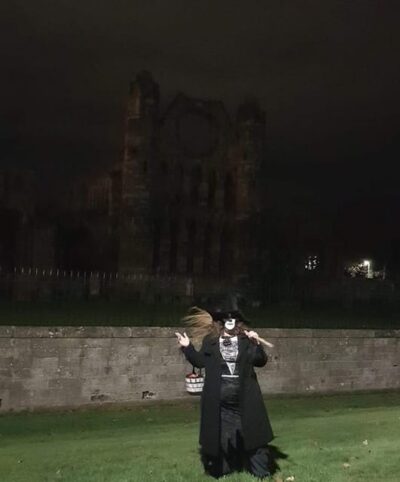

Also on these Scottish lists