
Review · SPEYSIDE TOURS
Elgin: Cathedral Interior Guided Tour
Ancient stones still have sharp stories. Elgin Cathedral’s guided tour brings its carved chapter house, painted angels, graveyard monuments, and Civil War scars into focus, with plenty of detail that is easy to miss alone. I like the rare 1298 grave effigy that keeps its medieval paint, and I like the way guide Lynda Dean mixes solid evidence with local legend. The main consideration is that this is a detail-heavy two-hour tour, so it suits curious history lovers more than anyone hoping for a quick look at the ruins.
The tour also reaches the cathedral towers and their carved stone collection, then moves through the graveyard to Scotland’s tallest gravestone. You’ll hear about body snatching, incense, burial customs, and Cromwell’s musket balls, but the site is open to the weather, so bring warm clothing and comfortable shoes.
In This Review
- Key things to know before you go
- Why Elgin Cathedral deserves two hours
- Starting at the cathedral gates
- The towers and the medieval stone collection
- The chapter house and painted angels
- A 1298 effigy with its paint intact
- The graveyard, decorated tombs, and burial rank
- Mort safes and the grim business of body snatching
- Marjory Gilzean and the human side of the ruins
- Cromwell’s musket ball holes
- Lynda Dean’s guiding style
- Is $44 good value?
- Who should book this tour?
- Should you book Elgin Cathedral’s guided tour?
- FAQ
- Where does the Elgin Cathedral tour meet?
- How long does the guided tour last?
- How much does the tour cost?
- What languages are available?
- Is the activity wheelchair accessible?
- What should I bring?
Key things to know before you go
- Look up in the chapter house: The octagonal ceiling and painted angels from the 1470s are the tour’s visual high point.
- See an unusually well-preserved effigy: A grave monument from 1298 still carries its original paint.
- Visit Scotland’s tallest gravestone: The Anderson family memorial reaches 5 metres and opens a window onto social rank and burial customs.
- Meet the mort safes: Two different iron devices show how families tried to protect graves from body snatchers.
- Find Cromwell’s musket ball holes: Small marks in the stone connect the cathedral to the turmoil of the Civil War.
- Listen for the human stories: Lynda Dean is praised for her humour, strong command of the subject, and care in separating fact from legend.
Why Elgin Cathedral deserves two hours
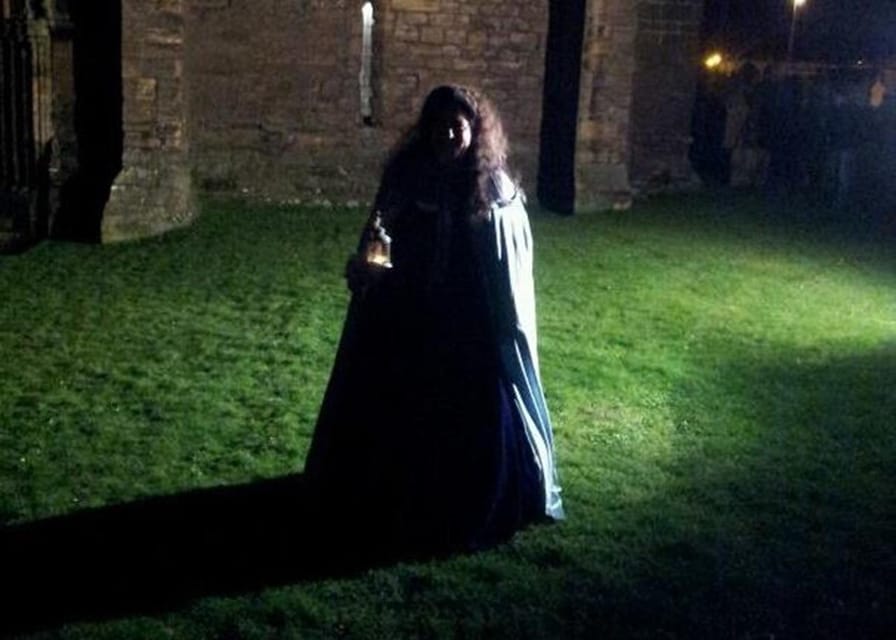
Elgin Cathedral is often called the Lantern of the North, a fitting name for a building that once held an important place in medieval Scotland. Today, its roofless remains can look quiet and fragmentary. A guide helps you see the building as more than a photogenic ruin.
I like tours that make you look up, down, and behind the obvious. Here, the carved stonework, graveyard details, painted decoration, and marks of conflict each tell a different part of the story. The result is less a walk around old walls and more a lesson in how a religious building shaped local life.
The tour lasts two hours and costs $44 per person. That price is not a bargain-basement admission ticket, but it can be fair value if you want a focused explanation rather than a short independent visit. You are paying for access to the guided experience, the carved stone collection in the towers, and close attention to details that can be hard to interpret on your own.
I would allow the full two hours. The cathedral covers several connected subjects, from medieval art to graveyard customs and military damage. Rushing through would reduce the tour to a list of objects, while the guide’s explanations give them meaning.
A few more Scotland days worth comparing
- Aberlour: Cardhu Whisky Distillery Tour and Tasting
★ 4.9 · 14 reviews - Elgin: High Street Graveyard Walking Tour
★ 5.0 · 4 reviews - Elgin: Witch Trials Tour
★ 5.0 · 3 reviews
Starting at the cathedral gates
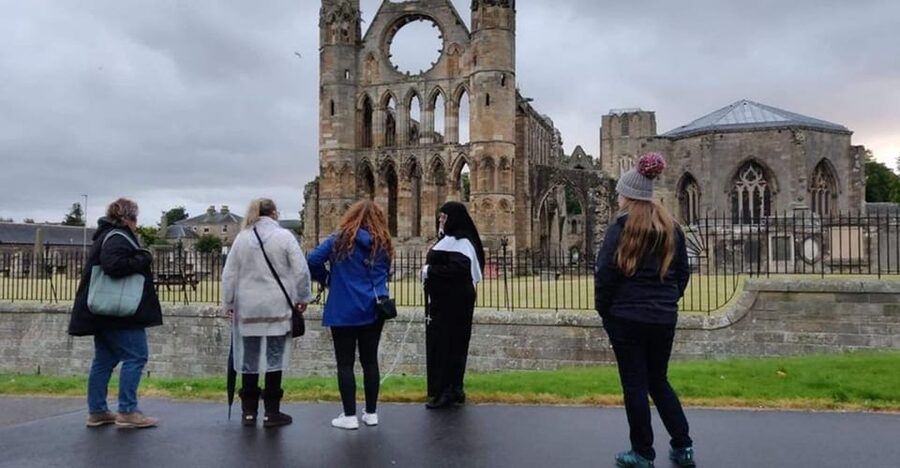
You meet at the gates of Elgin Cathedral. That simple meeting point matters in a historic site with several entrances and scattered features. Arrive ready to begin outside, with comfortable shoes and warm clothing.
The cathedral is a ruin, and the weather is part of the experience. A clear day will help with photographs and views from the towers, but Scottish weather can change quickly. A warm layer is sensible even if the morning begins mild.
The site does not allow smoking or vaping. Drones, alcohol, drugs, intoxication, littering, climbing, and bare feet are also prohibited. Those rules fit the character of the place: this is a historic religious site and graveyard, not a casual adventure park.
The tour is offered in English and Spanish. It is also listed as wheelchair accessible, which is useful for anyone planning around mobility needs. Since the route includes towers and older architectural spaces, I would confirm the practical route details when booking if you have specific access requirements.
The towers and the medieval stone collection
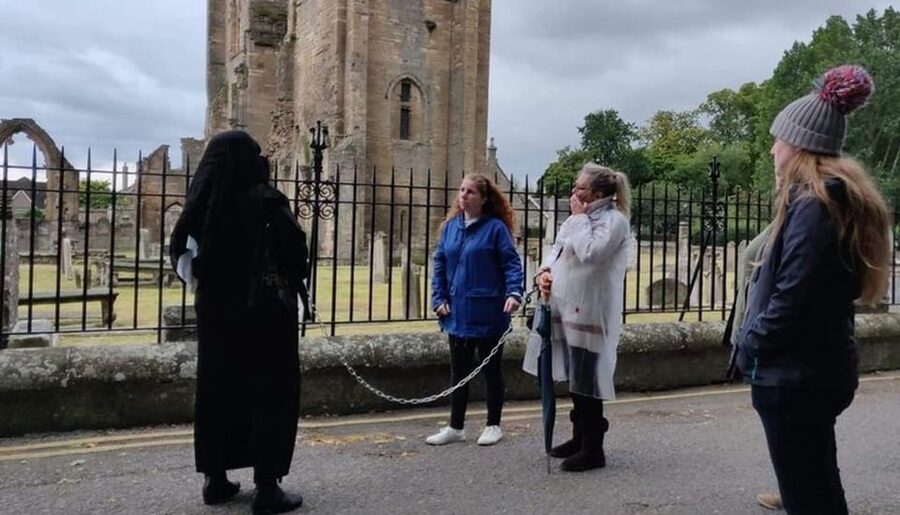
One of the first major rewards is the cathedral’s tower area, where you can see a collection of medieval carved stones. This is where the building’s stonework becomes almost theatrical. Ferocious lions and mythical beasts appear among the carved pieces, giving you a sense of the imagination and skill that went into medieval decoration.
I find carved fragments especially valuable at ruins because they restore some of the colour and energy lost when a building loses its roof and furnishings. A wall can tell you about construction. A carved beast tells you about ideas, fears, symbols, and artistic choices.
The tower collection also gives the tour a useful change of pace. You are not simply walking across open ruins and hearing dates. You are stopping to examine individual pieces, their shapes, and their purpose.
Climbing ancient towers can be appealing for the views and the architecture, but it may not suit everyone. The tour information confirms wheelchair accessibility, though the tower route itself may have practical limits for some participants. Ask ahead if the tower collection is essential for your visit.
The chapter house and painted angels
The chapter house is the architectural star of the tour. Its octagonal ceiling is richly carved and regarded as one of the finest in Scotland. Look up slowly. The ceiling is the kind of feature that disappears if you focus only on the walls and floor.
The painted angels from the 1470s add an unexpected touch of colour. In a roofless stone ruin, it is easy to assume medieval churches were always grey and bare. These surviving painted figures remind you that medieval worship spaces could be bright, decorated, and visually busy.
I especially like this part because it corrects a common misunderstanding. The cathedral’s present appearance is stripped back by time and damage, but its original interior would have made a much stronger visual impression.
Your guide can also explain how the decoration related to church practice. The tour includes discussion of incense and its ritual use, which helps connect the carvings and paintings to the ceremonies once held here.
For photographers, the chapter house is worth extra patience. The ceiling and angels are not just quick snapshots. Take a moment to study the patterns and figures, then listen to the explanation before moving on.
A completely different kind of day out:
- The World Famous Underground Ghost Tour
★ 4.5 · 9,272 reviews - Underground Vaults Walking Tour in Edinburgh Old Town
★ 4.5 · 8,506 reviews - Loch Ness, Scottish Highlands, Glencoe and Pitlochry Tour
★ 5.0 · 6,854 reviews - Loch Ness & Highlands Small-Group Tour from Edinburgh with Cruise
★ 4.5 · 6,022 reviews
A 1298 effigy with its paint intact
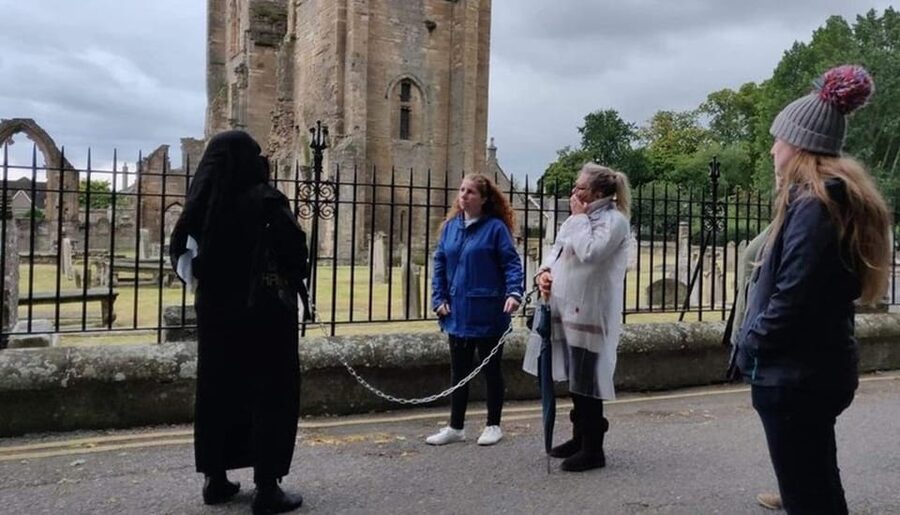
The tour includes a rare grave effigy dating from 1298. Its original paint remains visible, an unusual survival that makes the object far more immediate than a plain stone monument.
Painted medieval sculpture can change how you picture the past. Modern eyes often expect old statues and tombs to be the colour of the stone itself. This effigy shows that medieval memorials could be painted to make clothing, faces, and other details clearer.
The date also gives the piece a strong sense of age without requiring a long lecture. You are looking at an object that has survived for more than seven centuries, with traces of its first appearance still present.
I would pay close attention to the guide’s explanation here. The paint is the point, but the wider value lies in understanding how memorials worked. A grave effigy was not only a marker for the dead. It also presented identity, rank, and religious hope to the living.
The graveyard, decorated tombs, and burial rank
Outside the main cathedral, the graveyard adds a later layer of local history. The tour points out highly decorated tombs from the 1600s onward, then uses them to explain how social standing shaped burial locations.
That subject can sound dry until you see the evidence in the cemetery. The size, decoration, and placement of a tomb could communicate a family’s status long after the person had died. Burial was not simply about where a body went. It could be a public statement about family, money, occupation, and importance.
The Anderson family memorial is the most striking example. At 5 metres high, it is Scotland’s tallest gravestone. You do not need specialist knowledge to understand its effect. Its height turns a grave marker into a landmark.
I like this stop because it moves the tour beyond medieval cathedral architecture. You begin with bishops, carvings, and painted angels, then reach the more familiar world of families trying to preserve their name. The graveyard makes the site feel local and personal.
Take care around the cemetery. This is a place of burial, so respectful behaviour matters. The rules against climbing and littering are especially relevant here.
Mort safes and the grim business of body snatching
The mort safes bring a darker subject into the tour. These heavy iron structures were made to protect graves from body snatchers. The tour shows two different types, allowing you to compare how the devices worked and why families considered them necessary.
This is one of the most memorable parts for anyone interested in crime, medicine, or social history. The demand for bodies for medical study created a serious threat around some burial grounds. A fresh grave could be disturbed soon after burial, causing fear and distress for families.
The tour also explains occupied wall tombs. These were not merely decorative structures. They served a practical purpose connected with burial and protection of the dead.
I appreciate that the subject is presented as part of ordinary life rather than as cheap horror. The mechanisms are grim, but they reveal the anxieties of the period. The graveyard becomes a place where people tried to defend family dignity with stone and iron.
If you prefer architecture without difficult subjects, this section may feel heavy. For most people, though, it adds a useful layer to the visit and explains why some graveyard features look unusually defensive.
Marjory Gilzean and the human side of the ruins
The tour includes the story of Marjory Gilzean, a homeless mother whose baby grew up in the cathedral ruins and later became a wealthy philanthropist. It is a striking local story because it shifts attention from grand churchmen and powerful families to a woman and child facing hardship.
Stories like this help keep a historic site from becoming a parade of dates. You hear about ordinary vulnerability, survival, and later success. The cathedral was not only a place for worship and burial. At different times, its ruins could also become shelter.
This story is also a good example of the guide’s role. Lynda Dean is praised for her humour and for clearly separating historical evidence from myth. That distinction matters at old sites, where memorable stories can grow in the retelling.
I would listen carefully to how the story is framed. The value is not only in deciding if every part can be proven. It is in understanding why the tale has lasted and what it reveals about how local people remember the cathedral.
Cromwell’s musket ball holes
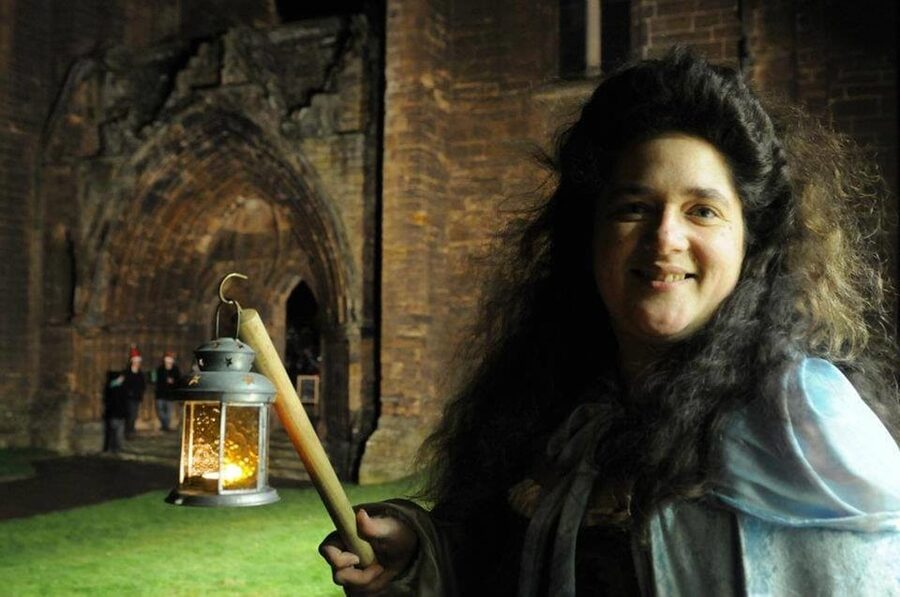
The cathedral also carries physical signs of conflict. The tour points out musket ball holes left by Oliver Cromwell’s men, linking the building to the Civil War period.
Small holes can be easy to ignore when you are surrounded by huge walls and towers. Once identified, they make the past feel more direct. This is not an abstract account of armies and politics. It is damage you can see in the stone.
I like this kind of evidence because it rewards careful looking. The cathedral is not only decorated with carved figures and memorials. It also records violence.
The guide’s explanation gives the marks their setting and purpose. Without context, a hole in masonry is just a hole. With context, it becomes a trace of military action and the changing fortunes of a religious building.
Lynda Dean’s guiding style
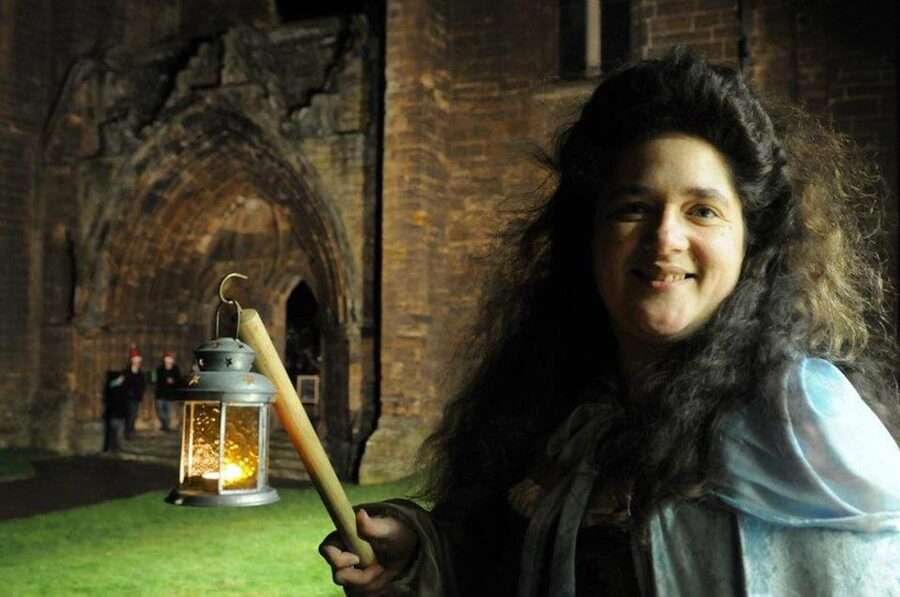
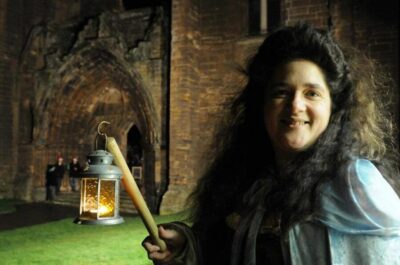
The guide can make or break a two-hour tour, and Lynda Dean receives especially strong praise for being well-informed, entertaining, and passionate about her subject. Her humour is an advantage during a long tour filled with dates, religious terms, and burial customs.
I also value the clear line between fact and legend. Elgin Cathedral has enough dramatic material to tempt a guide into presenting every tale as certain. A careful explanation lets you enjoy the local stories without confusing them with established evidence.
The tone sounds best suited to people who enjoy questions and context. You will get more from the experience if you are willing to look closely and listen for connections between architecture, worship, family status, conflict, and folklore.
The tour is offered in English and Spanish, so you can choose the language that suits your booking. Since only two written ratings are available, I would treat the perfect score as encouraging but not as a guarantee that every guide or group will feel identical. The strongest consistent point is the quality of Lynda Dean’s presentation.
Is $44 good value?
At $44 per person, the tour costs more than simply walking around a ruin for a few minutes. Its value depends on how much explanation you want.
I think the price makes sense for you if you care about carved details, medieval art, burial practices, and local stories. The tour covers the towers, stone collection, chapter house, graveyard, mort safes, wall tombs, Marjory Gilzean’s story, incense, and Civil War damage in two hours.
That is a lot of ground, but it is also the main caution. If you prefer to wander slowly and quietly, the fixed pace may feel busy. You may want more time for photography or private reflection than a guided route allows.
The flexible booking terms help reduce the risk. You can cancel up to 24 hours in advance for a full refund, and you can reserve now and pay later. A gift shop is also on site, with time to browse during the visit.
Who should book this tour?
I would choose this experience if you like medieval buildings but want more than a general account of their construction. It suits visitors interested in art, religion, cemeteries, folklore, and the less comfortable parts of social history.
Families with older children may find the carved beasts, painted angels, tall gravestone, and musket ball holes easy entry points. The mort safes and body-snatching material are darker, so parents should decide if that subject fits their group.
Photographers will appreciate the chapter house and painted details, though the tour’s pace may limit how long you can spend on each composition. People with mobility concerns can note that the activity is listed as wheelchair accessible, then confirm the tower route before booking.
I would skip it if you only have time for a fast exterior photograph, dislike guided commentary, or want a quiet visit with no discussion of death and burial. Elgin Cathedral rewards attention, and this tour is built around attention.
Should you book Elgin Cathedral’s guided tour?
Book it if you want the ruins to make sense. The painted angels, original colour on the 1298 effigy, 5-metre Anderson memorial, mort safes, and Cromwell’s musket ball holes give the visit plenty of memorable stops.
The strongest reason to go is Lynda Dean’s blend of humour, passion, and care with the facts. At $44, it is a considered purchase, but the two-hour route offers much more than a quick walk around old stone. Bring warm clothes, wear comfortable shoes, and give the cathedral enough time to speak through its carvings, graves, legends, and scars.
FAQ
Where does the Elgin Cathedral tour meet?
The meeting point is at the gates of Elgin Cathedral in Moray, United Kingdom.
How long does the guided tour last?
The tour lasts two hours.
How much does the tour cost?
The listed price is $44 per person.
What languages are available?
The live guide is available in English and Spanish.
Is the activity wheelchair accessible?
Yes. The activity is listed as wheelchair accessible.
What should I bring?
Bring comfortable shoes, warm clothing, and a camera.
Just added in Scotland
- Northern Islands RIB Tour★ 5.0 · 15 reviews
- Highland Whisky Distilleries Shore Trip from Invergordon Cruise Port★ 5.0 · 2 reviews
- Tours from Invergordon Port★ 5.0 · 1 review
- ULLAPOOL PORT Cruise Ship Tour, Ardvreck Castle, Rocks & More★ 5.0 · 5 reviews
- Full-Day Private Speyside Malt Whisky Trail Tour from Grantown-on-Spey★ 5.0 · 22 reviews
- Guided Walks in Grantown-on-Spey★ 5.0 · 35 reviews
- Explore Glenfinnan – Adults★ 5.0 · 5 reviews
- Glenaladale Cruise – Great for wizard spotting!★ 5.0 · 70 reviews
Speyside Tours, compared.

Aberlour: Cardhu Whisky Distillery Tour and Tasting
Read our review →
Also on these Scottish lists