

Review · ST ANDREWS TOURS
St Andrews Old Course History Tour, for the Golfer
Golf’s biggest stories fit into a brisk walk. This 75-minute tour connects St Andrews town history with the making of golf, then takes you onto the Old Course’s famous opening and closing holes. I especially like the chance to walk across the fairway and the personal stories from guides such as Richard, a former Old Course caddie. The main concern is pace: the English commentary can be fast, so a strong command of English matters.
I also like the small maximum group of 15, which gives you a better chance to hear the guide and ask for context. The Swilcan Bridge photographs are a real treat, with professionally taken pictures included. Just remember that the tour is not suitable for strollers, mobility aids, recent injuries, or anyone hoping to bring golf clubs along.
In This Review
- Key points at a glance
- Why this short tour matters in St Andrews
- Start at Hotel du Vin and set the town in context
- The Links and the early story of golf
- The Royal and Ancient and the making of the Old Course
- Grannie Clark’s Wynd and the changing hole count
- Rusacks, farmers, and the first and eighteenth holes
- Swilcan Bridge and the best photo stop
- The Road Hole and the Jigger Inn finish
- What $25 buys you
- Who will enjoy it most
- Timing, weather, and practical preparation
- My recommendation for the Old Course history walk
- FAQ
- How long does the St Andrews Old Course History Tour last?
- Where does the tour begin?
- Where does the tour finish?
- What language is the tour offered in?
- Can I walk across the Old Course fairway?
- Are photographs at Swilcan Bridge included?
- Are food and drinks included?
- How many people can join the tour?
- Is the tour suitable for children?
- Can I bring a stroller, mobility scooter, walking frame, crutches, or golf clubs?
- What happens if the weather is too poor for the tour?
Key points at a glance
- Former caddie stories: Guides such as Richard add practical course knowledge and personal memories to the formal history.
- A rare Old Course walk: You can cross part of the fairway around the 1st and 18th holes when play allows.
- Swilcan Bridge photographs: The tour includes professionally taken pictures, except on tournament days.
- Golf history in compact form: In about 75 minutes, you cover the game’s early development, the Old Course, and famous moments.
- Small shared group: The maximum is 15 people, a useful limit for hearing the guide outdoors.
- A good value at $25: You get a local guide, course access where permitted, and photos without paying for a full playing round.
Why this short tour matters in St Andrews
St Andrews can feel like a pilgrimage site for golfers. The Old Course is not simply a famous course to look at. It helped shape the way golf is played, and many features now taken for granted, including fairways, bunkers, and an 18-hole layout, are tied to its development.
This tour gives you a framework before you wander around on your own. You learn why St Andrews is called the Home of Golf, then see the ground where that story unfolded. For a golfer, that connection can make a visit far more meaningful than a quick photograph outside the clubhouse.
I also think this works well for non-golfers. Several parts of the tour deal with local history, farming, hotels, caddies, and the changing town. You do not need to understand handicap rules or know every Open champion to follow the broad story.
The tour has a 4.7 rating from 150 reviews, with 91 percent of customers recommending it. That is a strong result, but the lower scores point to one real issue: the guide’s delivery can be quick and sometimes follows a set script. If you want a loose, question-led walk, this may feel more structured than expected.
More St Andrews trips:
- St Andrews & the Fishing Villages of Fife Small-Group Day Tour from Edinburgh
★ 4.5 · 1,973 reviews - St Andrews Must-Sees Daily Walking Tour (11am & 2pm)
★ 5.0 · 478 reviews - Edinburgh: St Andrews & The Fishing Villages of Fife
★ 4.5 · 431 reviews
Start at Hotel du Vin and set the town in context
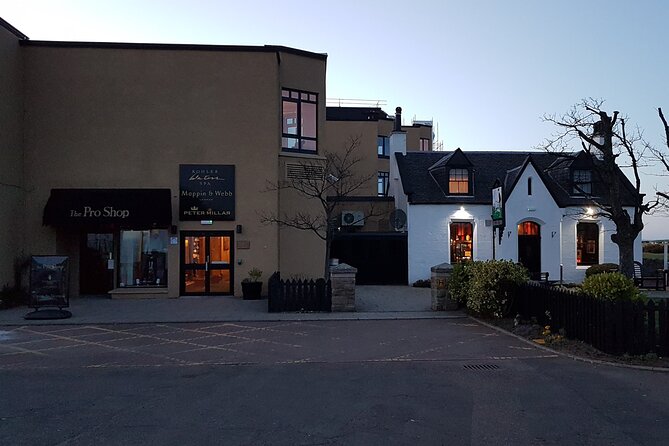
Meet Richard outside Hotel du Vin St Andrews at 40 The Scores. Be on time. This is a shared public tour, and the group will not wait for late arrivals.
The opening five minutes provide a short introduction to St Andrews and lead toward the 1123 Links charter. That detail matters because the tour does not treat the Old Course as an isolated sporting attraction. It links the course to the town and to the long story of common land, local use, and development.
This first stop is brief, so you will not get a full town walking tour. Think of it as a quick orientation. It helps you understand why the links are part of St Andrews itself, rather than a separate resort built away from town.
The Links and the early story of golf
The next ten minutes move into the origins of golf. The guide covers the early stick-and-ball games associated with the Low Countries, the game’s movement to Edinburgh, and the 1744 rules connected with the development of golf.
The useful point here is that golf did not arrive fully formed. It changed over time as players, clubs, and courses created new customs and rules. St Andrews became central to that process, which is why the town is known as the Home of Golf.
If you know the modern game well, you may enjoy seeing how familiar ideas developed from less formal beginnings. If you are new to golf, this section gives you enough background to understand the stops that follow.
The guide’s personality matters here. Richard is praised for humor, clear command of the subject, and storytelling that connects legends with real places. Some people found his delivery too rapid, though, so stand close to the guide and speak up if you cannot hear.
The Royal and Ancient and the making of the Old Course
At the Royal and Ancient Golf Club of St Andrews, the tour turns toward the Old Course itself. You hear how changes to the course helped change golf, including the development of fairways, bunkers, and other features that are now standard parts of the game.
The 15-minute stop also covers Old Tom Morris and the old caddie shack. These details give the course a human side. You are not just hearing names from a trophy cabinet. You are hearing about the people who worked, played, maintained, and reshaped the course.
This is one of the strongest parts for serious golfers because it explains how the course grew rather than pretending it appeared in its modern form. The Old Course developed through practical decisions and changing demands. That makes its unusual layout easier to appreciate.
The guide also shares notable golfing moments. Exact stories will depend on the guide and the group, but the focus is on events and people that made these holes part of golf folklore. Richard’s past as a caddie adds useful texture because he can speak about the course from more than a visitor’s viewpoint.
More History Tours in St Andrews:
- St Andrews Tours: Town, Golf and Old Course History
★ 5.0 · 138 reviews - St Andrews, Fife Coast Walk & Historic Abbey Tour from Edinburgh
★ 5.0 · 62 reviews - St Andrews History Tours
★ 5.0 · 41 reviews - Tour of St Andrews and Historic Fife Small Group Tour
★ 4.0 · 9 reviews
Grannie Clark’s Wynd and the changing hole count
The stop at Grannie Clark’s Wynd lasts about 15 minutes and covers some of the Old Course’s most important changes. You hear about the Open Championship, the Dunhill Cup, and the course’s shift from 12 holes to 10 and finally to 18.
That change is more than a piece of trivia. It explains why the Old Course can seem unusual to anyone used to modern courses with a tidy outward nine and inward nine. Its layout reflects growth and adaptation over a long period.
The guide also points out important places around the 18th hole. This is a good point to listen for the relationship between public paths, town streets, and active golf. The Old Course is woven into St Andrews, so you may see people moving through the area while play continues.
You should not expect unrestricted access to every part of the course. The tour can walk across the fairway only when conditions allow and without interrupting play. On tournament days, access and photo opportunities may be restricted.
Rusacks, farmers, and the first and eighteenth holes
The walk continues near Rusacks St Andrews for about ten minutes. Here you learn about the 1st and 18th fairway, the farmers who used the land, the Mannings, the original 1st tee, and the 18th hole.
This stop helps explain the Old Course’s shared character. You are looking at a working public space as well as a major golf venue. The town, the hotels, the fairway, and the people who used the land all belong to the course’s story.
One of the more unusual tales concerns early caddies and ladies on the course. According to the tour’s history, those activities helped lead Old Tom Morris to create the world’s first putting green. It is a memorable example of how ordinary use can prompt changes in the game.
For a golfer, seeing the 1st tee and 18th hole side by side is a special moment. You can watch one group begin while another finishes, with the famous fairway acting as the link between them. For a non-golfer, the scene is still easy to understand: this is where a round starts and ends in full view of the town.
Swilcan Bridge and the best photo stop
The Swilcan Bridge is the visual centerpiece. You get time for photographs at one of golf’s most recognizable landmarks, and professionally taken photos are included in the tour price.
This is not a rushed pass-by. The group has a specific photo stop, though the guide will not waste time waiting around if the bridge is busy. The supplied information says the photo opportunity excludes tournament days, including the Open and Dunhill events.
The bridge is famous partly because so many golfers have crossed it over the years, but its appeal is also practical. It gives you a clear, memorable image of your time at the Old Course without needing to play a round.
Bring a warm layer even if the day begins pleasantly. One customer specifically advised wrapping up because the weather turned cold during the walk. St Andrews can change quickly, and you will be outdoors for the full experience.
The Road Hole and the Jigger Inn finish
The final ten minutes take you toward the Road Hole, the 17th green, then finish near the Old Course Jigger Inn. The guide shares dramatic golfing moments connected with one of the most famous holes in the game.
The tour ends near the Jigger Inn rather than with a formal indoor finish. Food and drinks are not included, but you can stay for refreshments by the 17th fairway. That makes the ending useful rather than abrupt. You can continue the conversation, have a meal, and watch the course from nearby.
One customer credited the guide with pointing the group toward an excellent fish and chips stop at the Jigger Inn. Treat that as a helpful possibility, not a guaranteed part of the tour. The important point is that the guide can help you make better use of the area after the walk.
The meeting information names Swilcan Bridge as the end point, while the tour description places the finish near the Road Hole and Jigger Inn. In practice, plan for the walk to conclude in the 17th-hole area. Confirm the exact final position with the guide if you have a tight onward schedule.
What $25 buys you
At $25 per person, this is an inexpensive way to add meaning to a visit to St Andrews. You are paying for a professional local guide, a compact history lesson, access to walk near key parts of the Old Course when play allows, and professionally taken Swilcan Bridge photographs.
You are not paying for a round of golf, entry to play the Old Course, food, or drinks. The price makes sense if you want context and a guided introduction. It is less useful if you only want to roam freely, since many exterior areas can be reached without a tour as long as you do not interrupt play.
The small-group limit of 15 improves the value. Outdoor tours can be hard to hear, particularly when the guide faces another direction or the wind picks up. Some groups were given earbuds, which helped, but I would still stay close and ask the guide to repeat anything you miss.
The tour is usually booked about 61 days ahead. That suggests you should reserve early if your St Andrews dates are fixed, especially if the visit is tied to a wider Scotland itinerary.
Who will enjoy it most
This is an excellent choice for the keen golfer who wants more than a photo beside the first tee. You get stories about famous holes, course design, caddies, Old Tom Morris, and the people who helped shape the game.
It also suits a mixed group. Several people who knew little about golf still enjoyed the town history, scenery, humor, and simple explanation of how golf developed. If someone in your party has a lifelong interest in the Old Course, this tour gives that person the special focus they want without forcing everyone else to play golf.
History fans should also find plenty to enjoy. The discussion reaches back to medieval St Andrews, the Links charter, early golf in Scotland, and the practical growth of the course. The tour is not only about champions and tournaments.
I would hesitate to recommend it to anyone who struggles with fast spoken English. The operator says all participants need a fluent command of English, and slowing down or translating is not enough. That is a firm requirement, not a minor footnote.
You should also choose another activity if you need a stroller, wheelchair-style mobility scooter, walking frame, or crutches. The tour has nowhere to store those items or golf clubs. It is not suitable for children under five, people recovering from knee or hip replacement, sprained ankles, or similar injuries.
Timing, weather, and practical preparation
The walk lasts about one hour and 15 minutes. It is not a long hike, but you should have moderate physical fitness and be comfortable walking outdoors over links terrain and town paths.
Wear shoes suited to walking and bring a waterproof layer. Poor weather can cancel the activity, in which case you are offered another date or a full refund. The same applies if the minimum number of participants is not reached.
A mobile ticket is provided, and the tour is offered in English. Service animals are allowed, and the starting point is near public transportation.
You can cancel free of charge up to 24 hours before the local start time for a full refund. Changes or cancellations made inside that 24-hour window are not accepted for a refund.
My recommendation for the Old Course history walk
Book this tour if you want the Old Course to make sense, not just look familiar from photographs. The price is fair, the route is manageable, and the chance to cross the fairway and stand on Swilcan Bridge gives the visit a real sense of place.
I would book it early in your St Andrews stay. That way, you can use the guide’s advice for the rest of your visit, including where to eat near the Jigger Inn and how to view the course without getting in the way of play.
Choose it with realistic expectations. The route is shared, the information comes at a brisk pace, and the tour may feel scripted if you want constant questions and discussion. But if you arrive on time, dress for Scottish weather, stay close to the guide, and bring genuine curiosity, this is a strong-value introduction to the Home of Golf.
FAQ
How long does the St Andrews Old Course History Tour last?
The tour lasts approximately one hour and 15 minutes.
Where does the tour begin?
Meet Richard outside Hotel du Vin St Andrews at 40 The Scores, St Andrews, KY16 9AS.
Where does the tour finish?
The tour finishes in the Road Hole area near the Old Course Jigger Inn, close to the 17th fairway. The meeting information also identifies Swilcan Bridge as an end point, so confirm the exact final position with the guide if needed.
What language is the tour offered in?
The tour is offered in English. All participants need a fluent command of English because speaking slowly or translating is not considered suitable for the experience.
Can I walk across the Old Course fairway?
You may get the opportunity to walk across the fairway around the 1st and 18th holes, provided you do not interrupt play and course conditions allow it.
Are photographs at Swilcan Bridge included?
Yes. Professionally taken photos at Swilcan Bridge are included, except on tournament days such as the Open and Dunhill events.
Are food and drinks included?
No. The tour finishes near the Jigger Inn, where you can buy food and beverages separately.
How many people can join the tour?
The maximum group size is 15 people.
Is the tour suitable for children?
The tour is not suitable for children under five.
Can I bring a stroller, mobility scooter, walking frame, crutches, or golf clubs?
No storage is available for strollers, carriages, crutches, walking frames, mobility scooters, or golf clubs, so you need to make other arrangements before joining.
What happens if the weather is too poor for the tour?
If poor weather causes a cancellation, you will be offered a different date or a full refund.
Just added in St Andrews
- St. Andrews Scenic Stroll: A Private Walking Exploration★ 5.0 · 6 reviews
- St. Andrews Spectral Soirée: Ghostly Echoes of History★ 5.0 · 1 review
- The Original St Andrews Photo Shoot Tour★ 5.0 · 7 reviews
- Barrel-top whisky tasting in St Andrews★ 5.0 · 20 reviews
- A Wee Walk and a Cocktail in St. Andrews★ 4.0 · 7 reviews
- St Andrews History Tours★ 5.0 · 41 reviews
- Watch Building Experience – St Andrews★ 5.0 · 40 reviews
- Private St. Andrews Tour with Dedicated Local Guide★ 5.0 · 38 reviews
St Andrews Tours, compared.
St Andrews Must-Sees Daily Walking Tour (11am & 2pm)
Read our review →
St Andrews & Cliffs and Dunnottar Castle in Spanish.
Read our review →
St Andrews Tours: Town, Golf and Old Course History
Read our review →
Private St. Andrews: Home of Golf Old Course Walking Tour
Read our review →
St Andrews, Fife Coast Walk & Historic Abbey Tour from Edinburgh
Read our review →
Kingdom of Fife & St Andrews Full-Day Guided Private Tour in a Premium Minivan
Read our review →Also on these Scottish lists