
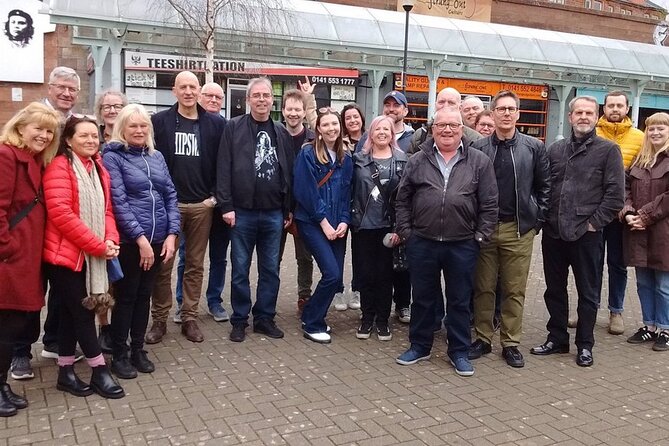
Review · WALKING TOURS
Merchant City Music Walking Tour of Glasgow
Glasgow sings best after dark. This two-hour Merchant City Music Walking Tour shows you the city through its live music venues, local performers, and stories of the bands that shaped Glasgow’s sound. I like the route’s focus on places you could easily miss, especially the atmospheric Britannia Panopticon and the famous Barrowland Ballroom. I also like that guides such as Fiona, an arts journalist, and Phil, known as P6, bring personal enthusiasm rather than delivering a dry list of dates.
The main consideration is that this is a walking tour with no concert included, so you are paying for stories, local context, and access to music landmarks rather than a live show. Access to the Britannia Panopticon is also not currently available, although the guide still explains its remarkable past. The tour runs in all weather, so Glasgow rain is part of the bargain.
In This Review
- What makes this Glasgow music walk worth your time
- Why Glasgow’s music story works best on foot
- The Clutha Bar sets the tone
- The Britannia Panopticon brings the oldest stories
- City Halls and the Old Fruitmarket connect music with trouble
- The Tron Theatre adds an older, darker note
- Barrowland Ballroom is the emotional center
- Barrowland Park turns the walk into a photo stop
- St Andrews in the Square changes the setting
- The 13th Note explains Glasgow’s independent sound
- Guides make or break this music tour
- Practical details for a comfortable walk
- Who should book this Glasgow music tour?
- Should you book the Merchant City Music Walking Tour?
- FAQ
- How long does the Merchant City Music Walking Tour last?
- Where does the tour start?
- Where does the tour finish?
- Is entry to the Britannia Panopticon included?
- Is food included in the tour price?
- What happens if I need to cancel?
What makes this Glasgow music walk worth your time
- Start at the Clutha Bar: See murals and hear why this Clydeside pub remains central to Glasgow’s live music culture.
- Hear the strange stories of the Britannia Panopticon: Learn about Britain’s oldest surviving music hall, including its links to Harry Lauder, Cary Grant, and Stan Laurel.
- Walk through Glasgow’s punk and rock past: City Halls and the Old Fruitmarket connect to a Stranglers concert and a short-lived ban on punk rock.
- Stand outside the Barrowland Ballroom: Follow the story of one of Scotland’s best-loved gig venues, then see band artwork along Barrowland Park.
- Finish in Glasgow’s independent music quarter: Explore the links between Postcard Records, The 13th Note, Mono Bar, and the city’s distinctive sound.
- Save on lunch afterward: Your ticket includes a voucher for 20 percent off food at Mono Cafe Bar.
Why Glasgow’s music story works best on foot
At $27.08 per person, this is a fair price for a two-hour guided walk, particularly if you care about music and want more than a standard city-center tour. You are not paying for entry to several attractions. Most stops are viewed from outside, and admission is free.
The value comes from the connections. A building becomes more interesting when you learn which performer appeared there, which concert caused trouble, or how one small venue helped shape a city’s identity. I like that this tour uses streets, pubs, theaters, churches, and concert halls as pieces of one larger story.
The group can reach 26 people. That is still manageable, but it is not a private tour. The small-group feel described in the tour details will depend on the day’s attendance. If the group is full, you may need to position yourself close to the guide at busy corners.
The meeting point is outside the Clutha and Victoria Bar at 159 Bridgegate. The tour begins at 11:00 a.m., and you should arrive 10 minutes early. It ends on King Street near King’s Court. Since the route covers several Merchant City and East End sights, the end point is useful for continuing your day on foot.
More City Tours in Glasgow
- City Sightseeing Glasgow Hop-On Hop-Off Bus Tour
★ 4.5 · 1,873 reviews - Glasgow City Centre Walking Tour with Local Guide
★ 5.0 · 1,326 reviews - Glasgow City and Clyde Bridges Bike Tour
★ 5.0 · 91 reviews
The Clutha Bar sets the tone
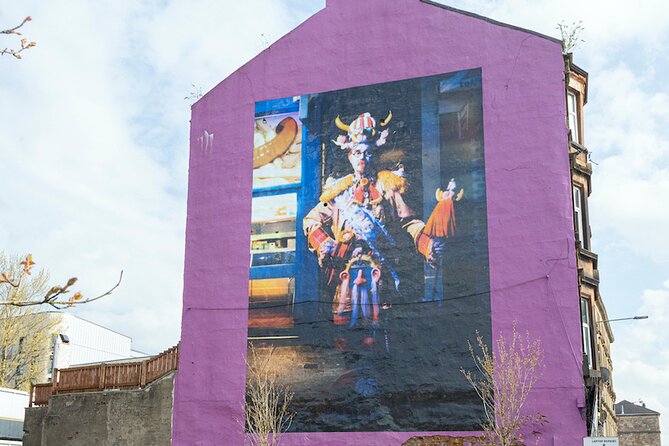
The walk begins at the Clutha Bar, one of Glasgow’s best-loved live music pubs. Its location by the River Clyde gives the opening stop a strong sense of place, but the murals are the real starting point for the tour’s visual story.
The artwork shows the range of music connected with Glasgow across the years. You will not just hear about famous names. You will also get a sense of the city’s pub culture and its long habit of making live music part of ordinary life.
Only about 10 minutes are scheduled here, so this is an introduction rather than a full visit. Food and drinks are not included, and you should not expect time to settle in for a pint before the walk begins. Still, the Clutha is a useful first stop because it makes clear that Glasgow’s music scene is not limited to major arenas.
The Britannia Panopticon brings the oldest stories
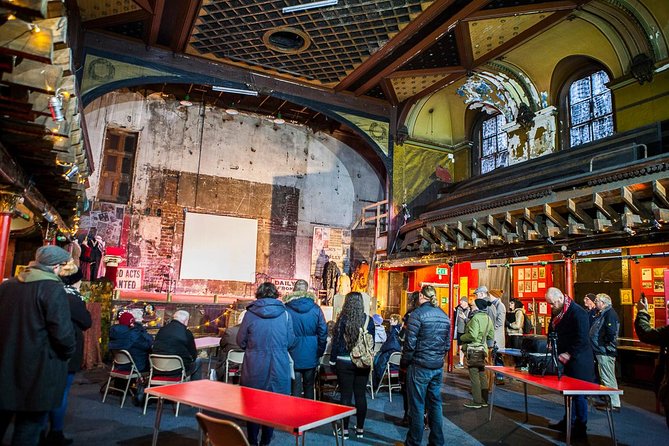
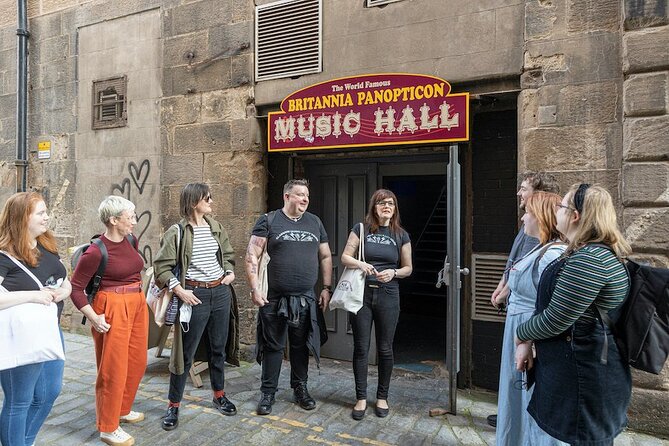
The Britannia Panopticon Music Hall is one of the most unusual stops. It is Britain’s oldest surviving music hall and remains a working venue, although current restrictions mean the tour does not have access inside. The guide can still tell you the stories tied to the building.
This is where the tour reaches beyond modern rock. The Panopticon hosted Scottish performer Harry Lauder and welcomed stage names including Cary Grant and Stan Laurel. That range helps you see Glasgow’s entertainment history as something broader than guitars and amplifiers.
The stop lasts about 20 minutes, making it one of the longer pauses on the route. I would value it even without interior access, but you should set your expectations correctly. You will hear the stories and view the building, not receive a full indoor visit at present.
One useful detail from the tour’s feedback is that the Panopticon was a highlight for Phil’s group. That makes sense. Its age, unusual setting, and connection to both Scottish performers and international stars give the walk a welcome change of pace.
City Halls and the Old Fruitmarket connect music with trouble
The City Halls and Old Fruitmarket offer another angle on Glasgow’s concert life. These venues have hosted memorable performances, including a Stranglers concert that led to punk rock being banned in Glasgow.
That story gives the tour some bite. Music is not presented as harmless background entertainment. It can challenge local rules, unsettle authorities, and force a city to decide what kind of culture it wants to permit.
The scheduled stop is around 10 minutes. You will not spend a long time inside either venue, and the details of current access are not provided. The real purpose is to understand how Glasgow’s music history includes conflict as well as celebration.
I especially like this part of the route for readers who think a music tour should explain more than who played where. The punk ban story shows how a concert can become part of civic history.
More Walking Tours in Glasgow
- Glasgow Street Art Daily Walking Tour: 2pm
★ 5.0 · 648 reviews - Gander Walking Tours in Glasgow
★ 5.0 · 506 reviews - Gothic Glasgow Walking Tour
★ 5.0 · 448 reviews - Glencoe, Scenic Walk & Highlands Guided Tour starting Glasgow
★ 5.0 · 121 reviews
The Tron Theatre adds an older, darker note
The Tron Theatre is now a major theater and concert venue, but its earlier story is more unsettling. The building’s past includes a devastating encounter with the notorious Hellfire Club.
The stop is brief, around five minutes. Do not expect a long theater visit or a performance. Instead, the guide uses the site to show how Glasgow’s entertainment spaces have changed over time.
This quick pause also helps keep the tour moving. With eight stops in about two hours, the schedule depends on short explanations and steady walking. You get a wide view of the city’s music sites, but not a lengthy look at each one.
Barrowland Ballroom is the emotional center
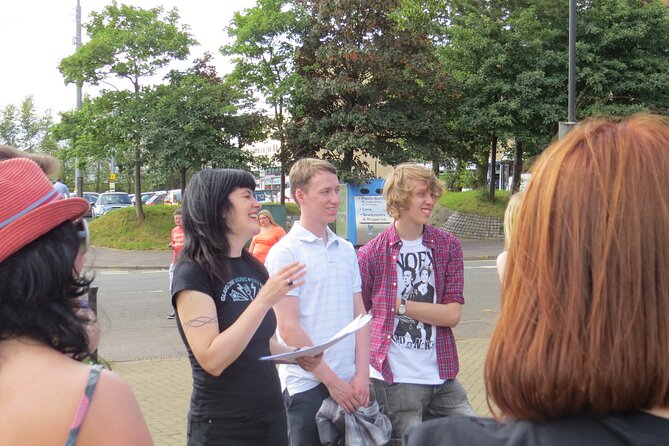
The Barrowland Ballroom is likely to be the stop that matters most to music fans. It is much loved by Glasgow gig-goers, and its story is as colorful as the performers who have appeared there.
The tour allows about 10 minutes at the ballroom. That is enough for an introduction, photographs, and stories, but not a full concert-hall experience. No performance or admission is included, so you will be seeing the venue as a landmark rather than attending an event.
The guide’s job here is to explain why the Barrowland means so much to the city. The point is not only its list of famous acts. It is also the place’s role in Glasgow’s everyday gig culture. A venue can become part of a city’s identity because people return to it again and again, and the Barrowland has that kind of affection attached to it.
If you want to attend a show there during your Glasgow visit, this walk can help you understand why the venue matters before you buy a ticket for another night. The tour itself does not provide concert tickets, so plan that separately.
Barrowland Park turns the walk into a photo stop
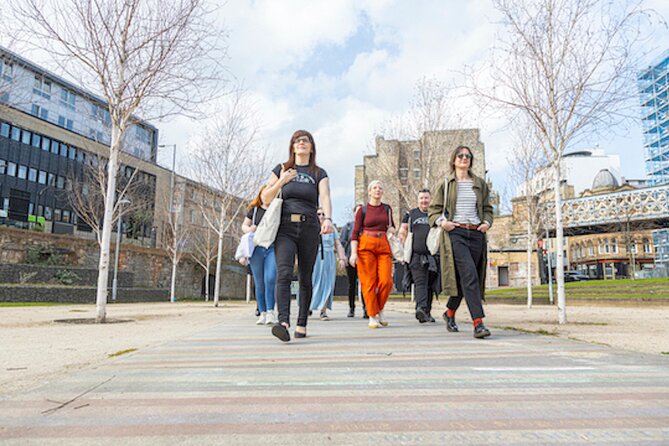
Barrowland Park continues the story outdoors. Artwork along the Barrowland Pathway highlights acts associated with the ballroom, creating an easy place to connect names with the venue you have just seen.
The tour allows about 15 minutes here, longer than at several of the buildings. The guide may discuss artists including The Smiths, Simple Minds, David Bowie, and Bob Dylan, along with other major names linked to the area.
This section should appeal to anyone who wants photographs as well as facts. It is also a useful pause after several compact stops. The artwork gives you something concrete to look at while the guide explains the reach of Glasgow’s music scene.
The list of performers is broad, but the guide should be able to give the route its local focus. That matters because a roll call of famous names can become forgettable. The better stories explain what each act meant to Glasgow and why certain venues became important.
St Andrews in the Square changes the setting

St Andrews in the Square is an 18th-century church that has been converted into a live music venue. Its architecture gives the tour a different mood after the pubs, theaters, and concert halls.
The stop lasts roughly five minutes, so you will get a concise explanation rather than a full architectural tour. The building also has links to major names in Scotland’s cultural past, connecting the setting to the wider story of Scottish music and performance.
I like this stop because it shows how Glasgow keeps using old buildings in new ways. A former church now serves as a place for live music, and that practical reuse fits the city’s creative character.
The 13th Note explains Glasgow’s independent sound
The walk finishes around King’s Court and The 13th Note. This is where the guide draws the main ideas together and offers theories about why Glasgow developed its own music scene.
The surrounding area links to Postcard Records, The 13th Note, and Mono Bar. These names point toward independent music, small venues, and the networks that help artists find an audience. You are no longer looking only at famous halls. You are considering the places and ideas that support a city’s music culture from the ground up.
The final stop lasts around 10 minutes and ends on King Street. That is a practical finish because you can continue exploring the Merchant City afterward or use the included voucher for 20 percent off food at Mono Cafe Bar.
Food and drinks are not included in the tour price, apart from the discount voucher. I would treat the voucher as a useful extra rather than a major reason to book. Its value depends on whether you want to eat at Mono after the walk.
Guides make or break this music tour
The strongest praise for this experience is aimed at the guides. Fiona is an arts journalist with a clear love for Glasgow and its musicians. Phil, also called P6, is described as bringing passion and insight to the route, with information about both the music scene and Glasgow itself.
That background matters. A guide who writes about the arts can explain why a venue matters, not just repeat a list of performers. The best moments on a tour like this come from the small connections: a concert that caused a ban, a church reused as a venue, or a local pub that reflects decades of changing musical tastes.
The tone also appears to be friendly and entertaining. One account described the walking as easy, with plenty of good photo points and a comfort break during the two hours. The exact timing of any break may vary, so do not assume a formal café stop is guaranteed.
The tour is offered in English only. If you enjoy asking questions, a smaller group should make that easier, though the maximum size is 26 people.
Practical details for a comfortable walk
The route takes about two hours and operates in all weather. Glasgow weather can change quickly, so wear a waterproof layer and comfortable shoes. You will be outside for much of the experience, and the tour does not include food or drinks.
Most people can take part, and service animals are allowed. If you have mobility concerns, contact the provider before booking to discuss the route. The tour is near public transportation, which makes reaching the starting point straightforward, but the exact transport connection you use will depend on where you are staying.
This tour is booked, on average, 25 days in advance. That suggests you should reserve ahead if the date matters to you, especially if you are visiting during a busy period. Confirmation is provided when you book.
Free cancellation is available if you cancel at least 24 hours before the start time. Changes or cancellations inside that window are not accepted for a refund. The cut-off follows Glasgow local time.
Who should book this Glasgow music tour?
I would choose this walk if you want a different view of Glasgow than the usual cathedral, shopping street, and museum route. It suits music fans, readers interested in social history, and anyone who likes seeing ordinary city spaces explained by a local guide.
It is especially useful early in your Glasgow stay. The walk can help you identify venues and neighborhoods you may want to revisit later. It also gives you a better reason to seek out a concert, pub session, or independent record shop during the rest of your visit.
You do not need to know every band mentioned. The tour covers enough of Glasgow’s wider story to work for curious first-time visitors. Still, dedicated music fans will get the most from the references to the Barrowland, Postcard Records, The 13th Note, and the many performers linked to the city.
I would skip it if you want a concert, extensive indoor access, or a general sightseeing tour with major attractions. The Britannia Panopticon is not currently open to the tour, and most stops are short outdoor visits. This is a story-led walk, not a ticketed venue tour.
Should you book the Merchant City Music Walking Tour?
Book it if you want local music stories, unusual venues, and an easy two-hour route for $27.08. The high rating and full recommendation from the supplied feedback fit the tour’s strongest qualities: enthusiastic guides, good pacing, strong photo stops, and a fresh view of Glasgow.
My main caution is simple: check the current access situation for the Britannia Panopticon and dress for the forecast. If you accept those limits, the tour offers a useful and entertaining way to hear how Glasgow became a music city, one pub, hall, theater, church, and street at a time.
FAQ
How long does the Merchant City Music Walking Tour last?
The tour lasts approximately two hours. The route includes eight stops, with pauses ranging from about five to 20 minutes.
Where does the tour start?
The meeting point is the Clutha and Victoria Bar at 159 Bridgegate, Glasgow G1 5HZ. You should arrive 10 minutes before the scheduled 11:00 a.m. departure.
Where does the tour finish?
The tour ends on King Street near King’s Court in Glasgow.
Is entry to the Britannia Panopticon included?
The tour currently does not have access to the Britannia Panopticon. The guide can still explain its history and connections to performers such as Harry Lauder, Cary Grant, and Stan Laurel.
Is food included in the tour price?
Food and drinks are not included. The ticket does include a voucher for 20 percent off food at Mono Cafe Bar.
What happens if I need to cancel?
You can receive a full refund if you cancel at least 24 hours before the experience begins. Cancellations or changes made less than 24 hours before the start time are not accepted for a refund.
Just added in Glasgow
- Stirling to Glasgow Luxury Car Transfer★ 5.0 · 1 review
- Day Tours & Shore Excursions Glasgow, Greenock & across Scotland★ 5.0 · 21 reviews
- Glasgow Greenock Shore Excursion Highland Lochs, Castles & Glens★ 5.0 · 6 reviews
- Glasgow Shore Excursions (Princess & Norwegian Cruise Ships)★ 5.0 · 2 reviews
- Glasgow; Glencoe, Oban & Highlands Private 11 Hour Tour★ 5.0 · 2 reviews
- Glasgow Luxury Private Day Tour with Scottish Local★ 5.0 · 2 reviews
- Glasgow Airport (GLA) to St Andrews Luxury Transfer★ 5.0 · 1 review
- Glasgow Airport to City Mercedes Minivan★ 5.0 · 1 review
Walking Tours, compared.
Underground Vaults Walking Tour in Edinburgh Old Town
Read our review →
Edinburgh Castle: Guided Walking Tour with Entry Ticket
Read our review →
Edinburgh Castle Guided Walking Tour in English
Read our review →
Edinburgh Darkside Walking Tour: Mysteries, Murder and Legends
Read our review →
Old Town Walking Tour History and Tales in Edinburgh
Read our review →
Haunted Vaults and Graveyard Walking Tour in Edinburgh
Read our review →Also on these Scottish lists