
Review · HISTORICAL TOURS
Medical and Surgical History of Edinburgh – Private Walking Tour
Medicine has shaped Edinburgh’s streets. This private walk links the Royal Mile, old hospitals, medical schools, and Surgeons’ Hall while showing how the city became a major centre for medical education. I like the clear route through real historic places and the chance to hear the story from Dr. Moray Grigor, a physician who brings personal medical experience to the subject. I also like the relaxed coffee stop and private format, which give you room to ask questions.
The main drawback is the distance. The walk covers about 2.5 miles and can run three to four hours, sometimes longer when conversation flows. It is a good choice for anyone comfortable on foot, but not a wise pick if you have chronic or painful musculoskeletal problems. At $130.44 per person, the price makes the most sense for a small group that values a tailored guide and a specialist subject.
In This Review
- Key points at a glance
- Why Edinburgh’s medical story works best on foot
- The Royal Mile: Edinburgh medicine begins in the Old Town
- Cowgate and Robertson’s Close: where medical teaching took shape
- Surgeons’ Hall: professional status and the fight for women’s education
- The former University of Edinburgh Medical School: student life behind the reputation
- Bristo Place and Charles Darwin’s former lodging
- Lauriston Place: finishing at the former Royal Infirmary
- What the private format is worth at $130.44
- Walking demands, timing, and practical planning
- Who will get the most from this walk?
- Should you book the Medical and Surgical History of Edinburgh tour?
- FAQ
- Where does the tour start?
- Where does the tour finish?
- How long does the tour last?
- How far do you walk?
- Is this a private tour?
- What language is offered?
- Is coffee or tea included?
- Are admission tickets included?
- Is the tour suitable for people with limited mobility?
- What happens if the weather is poor?
- Can I cancel for a refund?
Key points at a glance
- Start on the Royal Mile: Follow Edinburgh’s oldest street while tracing the early roots of local medicine and surgery.
- Find the first teaching hospital: Robertson’s Close leads to the site of The Little House and the first Royal Infirmary of Edinburgh.
- Hear the story of women in medicine: Surgeons’ Hall provides the setting for the long fight to admit women to Edinburgh’s Medical School.
- Walk through student life: At the former University of Edinburgh Medical School, you’ll hear about the work, hardships, and rewards of medical training.
- Follow Darwin’s Edinburgh connection: The route passes the former lodging of medical student Charles Darwin before reaching the grand 1880s medical buildings.
- Finish at the old Royal Infirmary: The former hospital’s entrance plaza gives the tour a fitting final chapter.
Why Edinburgh’s medical story works best on foot
Edinburgh’s medical past is not confined to one museum. It is spread through closes, streets, university buildings, hospital sites, and grand civic spaces. That makes this tour useful if you want to understand how medicine developed alongside the city itself.
You begin at Hunter Square, close to the Royal Mile, then make your way south through the Old Town and toward the university district. The walk ends at Edinburgh Futures Institute on Lauriston Place, in the former Royal Infirmary of Edinburgh. The route connects places that can seem unrelated when viewed separately.
I like this approach because it gives medical history a physical setting. You are not only hearing about institutions. You are standing where doctors trained, where hospitals operated, and where medical education changed over time.
The private format matters here. Only your group takes part, so the pace can suit your interests. If you work in healthcare, study medicine, or simply enjoy social history, you can ask for more detail. Dr. Moray Grigor is also a physician, which adds a useful professional viewpoint to the stories and helps connect older medical practice with present-day healthcare.
More History Tours in Edinburgh
- Old Town Walking Tour History and Tales in Edinburgh
★ 5.0 · 2,168 reviews - Old Town Historical and Underground Tour
★ 5.0 · 1,574 reviews - Multi-Sensory Small-Group Historic Vaults Tour in Edinburgh
★ 4.5 · 1,384 reviews
The Royal Mile: Edinburgh medicine begins in the Old Town
The first 45 minutes take place around the Royal Mile. This is a familiar part of Edinburgh, but the medical story gives it a different purpose. Rather than treating the street as a grand procession from castle to palace, the guide uses it to explain the beginnings of Edinburgh’s medical and surgical institutions.
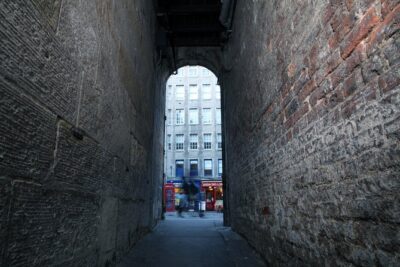
You’ll also see the alleyway connected with the early College of Physicians. These narrow passages are exactly the sort of places that are easy to miss if you walk the Royal Mile without a guide. Here, the point is not simply to admire old stonework. You’re learning how professional medicine established itself in the city.
This opening section is a good fit for anyone who likes context before famous buildings. It sets up the rest of the walk by explaining why Edinburgh became important in medicine and surgery. The admission cost is free because the tour is based on outdoor sites and guiding rather than a ticketed attraction.
The Royal Mile can be crowded and uneven, so comfortable shoes are sensible. The tour is not a quick photo stop. Expect to walk, listen, and pause for explanations in the middle of a busy historic district.
Cowgate and Robertson’s Close: where medical teaching took shape
The next stage takes about an hour and moves into the Cowgate area. Just off the Cowgate, you’ll locate Robertson’s Close, the site of The Little House, described as Edinburgh’s first teaching hospital.
That small beginning leads to the complex associated with the first Royal Infirmary of Edinburgh. This is one of the more useful parts of the route because it shows that medical education did not begin in the monumental buildings most people picture today. It developed through smaller spaces and practical arrangements before gaining purpose-built institutions.
I find this section especially valuable for understanding the link between hospitals and teaching. The hospital was not only a place to treat sick people. It was also a place where medical students learned through observation and practice. That connection shaped Edinburgh’s reputation and helped create the medical centre you see later in the walk.
The Cowgate section may appeal to you more than a standard list of famous doctors. It focuses on how systems developed, where students learned, and how the city adapted its buildings for medical use. If your interest is social history, this is likely one of the strongest parts of the tour.
It is also a substantial hour of walking and commentary. You should expect the guide to keep the story moving, but there is still a lot to absorb. One person described the information as plentiful, though thoroughly enjoyable. That is fair advice: come ready to listen, not just stroll.
Surgeons’ Hall: professional status and the fight for women’s education
After the Cowgate, the walk reaches Surgeons’ Hall Museums, the historic home of Edinburgh’s surgical profession. The scheduled stop lasts about 45 minutes and includes a refreshment break.
Do not assume this means a full museum visit. The experience focuses on the building, its role in surgical history, and the surrounding story. One important subject here is the long battle for women to gain admission to the Medical School. That gives the tour a wider social purpose. You are not only hearing about institutions and famous physicians. You are also hearing about who was allowed into the profession and who was kept out.
This is one of the most important stops because medical history can become too focused on discoveries and prominent men. The struggle for women’s access shows how education, status, and professional power shaped healthcare. It also gives the walk a strong human dimension.
The coffee stop is practical rather than grand. Coffee or tea is not included, so bring money for your own drink and any food you want. This pause breaks up the walking and gives you a chance to discuss what you have heard. The break is especially welcome if the tour stretches beyond three hours.
If you want to tour a medical museum in depth, you should check your schedule separately. The walk does not promise a full museum visit, and the experience is better understood as an outdoor history tour with selected institutional settings.
More Walking Tours in Edinburgh
- Underground Vaults Walking Tour in Edinburgh Old Town
★ 4.5 · 8,506 reviews - Edinburgh Castle: Guided Walking Tour with Entry Ticket
★ 5.0 · 5,540 reviews - Edinburgh Castle Guided Walking Tour in English
★ 5.0 · 5,214 reviews - Edinburgh Darkside Walking Tour: Mysteries, Murder and Legends
★ 5.0 · 3,862 reviews
The former University of Edinburgh Medical School: student life behind the reputation
The route then reaches the former home of the University of Edinburgh Medical School. This section lasts about 20 minutes, but it adds an important layer to the story.
Here, you’ll hear more about Edinburgh’s rise as a medical centre and about the daily life of its students. The focus includes both the drudgery and the rewards of medical training. That balance matters. Famous medical schools can sound glamorous from a distance, but education was demanding, competitive, and hard work.
I like this stop because it shifts attention from grand institutions to ordinary students. You get a sense of the effort behind Edinburgh’s reputation. The city’s medical importance was not created by buildings alone. It depended on teachers, students, patients, and a system that turned medical study into a serious profession.
The short timing also helps the overall pace. After the longer Cowgate section and the 45-minute opening and Surgeons’ Hall stops, a compact segment keeps the walk from becoming too heavy. One of the strongest practical details about this tour is its pacing. Dr. Grigor has been praised for keeping the walk well timed while still allowing plenty of conversation.
Bristo Place and Charles Darwin’s former lodging
At Bristo Place, the tour passes the site of Charles Darwin’s old medical student lodgings. Darwin is best known for his later scientific work, but this stop places him in a more ordinary setting: a student in Edinburgh, living near the institutions where medical training took place.
The route continues toward the imposing 1880s Medical School and graduation hall. This change in architecture helps you see the growth of Edinburgh’s medical institutions. The walk has moved from closes and early hospital sites to buildings designed to express the importance of medical education.
The stop lasts about 25 minutes. That is enough time to connect Darwin’s student years with the larger story without turning the tour into a biography of Darwin. If you have little interest in him, the stop still works because it supports the main theme: Edinburgh attracted ambitious students and built institutions to serve a growing medical community.
This section is also useful for first-time visitors who want to get beyond the most familiar Old Town sights. You are still in central Edinburgh, but the route reveals another side of the city, one shaped by classrooms, hospitals, and professional training.
Lauriston Place: finishing at the former Royal Infirmary
The final stop is the entrance plaza of the former Royal Infirmary on Lauriston Place. The tour ends at Edinburgh Futures Institute, part of the University of Edinburgh, at 1 Lauriston Place.
The final 15 minutes focus on some of the great doctors and surgeons associated with the institution. This is a fitting close because the route has already explained the early beginnings of Edinburgh medicine, the first teaching hospital, student life, professional training, and the growth of medical education.
Ending in a grand courtyard gives the walk a sense of arrival. You have followed the subject from narrow Old Town passages to a major hospital complex. The contrast helps show how far Edinburgh’s medical institutions developed.
The end point is not the same as the start, so plan your next activity from Lauriston Place rather than Hunter Square. The walk finishes in central Edinburgh, but you may want a short break before continuing with sightseeing.
What the private format is worth at $130.44
The listed price is $130.44 per person. That is not a budget walking tour, especially for a solo participant or a couple. The value comes from the subject, the private guide, and the chance to shape the conversation rather than from admission tickets.
All guiding and commentary are included. Coffee and tea are not included, and the tour does not present itself as a full museum admission package. You are paying for specialist interpretation and a planned route through Edinburgh’s medical sites.
For a group of friends, family members, or healthcare colleagues, the cost may be easier to justify, especially since group discounts are available. A private tour also avoids the limitations of a large mixed group. You can ask about medical education, social change, Scottish physicians, or the practical side of historic healthcare.
The guide’s professional background strengthens the value. Dr. Grigor has been praised for being warm, enthusiastic, and able to discuss healthcare as well as history. That combination is important. A purely academic talk could become dry, while a general city walk might not give enough medical detail. This experience aims for the middle ground.
I would book it for a small group with a genuine interest in the subject. I would not book it simply because you want a general introduction to Edinburgh. The route is focused, and the price reflects that focus.
Walking demands, timing, and practical planning
The tour lasts about three to four hours and covers approximately 2.5 miles. One session ran for more than four hours because the conversation and coffee stop extended the experience. You should leave room in your day rather than scheduling a tight museum visit immediately afterward.
You need a moderate level of physical fitness. The distance is manageable for many people, but historic Edinburgh includes slopes, uneven paving, and extended periods on foot. If you have a chronic or painful musculoskeletal condition, the tour provider does not recommend taking part.
The experience is offered in English and uses a mobile ticket. Service animals are allowed, and the route is near public transportation. Since the activity depends on good weather, poor conditions can lead to a different date or a full refund.
Booking is often done well ahead, with an average lead time of about 75 days. That suggests you should reserve early if your dates are fixed, particularly if you want a specific morning. Confirmation is sent within 48 hours, subject to availability. The listed operating window is 8:00 a.m. to 2:00 p.m., Monday through Sunday, for the stated booking period, so check the available start time carefully.
You can cancel for a full refund up to 24 hours before the start. Cancellations or changes inside that 24-hour window are not accepted for a refund.
Who will get the most from this walk?
I would recommend this tour to:
- Medical professionals and students who want a personal connection to Edinburgh’s medical institutions
- People interested in social history, education, and the development of hospitals
- Repeat visitors who have already seen the castle and main Royal Mile sights
- Small groups who prefer a private guide and open conversation
- Families with older children or adults who can manage several hours of walking
I would be more cautious if you want a broad sightseeing tour. You will see important parts of central Edinburgh, but the subject remains medicine and surgery. The tour is also less suitable for anyone who dislikes long explanations or has difficulty walking 2.5 miles.
The strongest praise has focused on the guide’s warmth, clear delivery, detailed stories, and good pacing. That is important because a specialist topic can easily become a lecture. Here, the experience appears designed to stay conversational and entertaining while still giving you substantial information.
Should you book the Medical and Surgical History of Edinburgh tour?
Book it if you want Edinburgh explained through its hospitals, medical schools, surgeons, and students rather than through the usual royal and literary stories. The route is carefully connected, the private format gives you freedom to ask questions, and Dr. Moray Grigor adds the perspective of a working physician.
Skip it if you want ticketed museum access, a short walk, or a cheap general city tour. The price is high for a walking experience with no included refreshments, and the three to four hours require real interest in the subject.
For the right person, this is a thoughtful and unusual way to understand Edinburgh. It turns ordinary streets into places of study, argument, ambition, and change. Bring good shoes, allow extra time, and treat the coffee stop as part of the conversation rather than an included meal.
FAQ
Where does the tour start?
The tour starts at Hunter Square in Edinburgh, EH1, near the Royal Mile.
Where does the tour finish?
It ends at Edinburgh Futures Institute, The University of Edinburgh, 1 Lauriston Place, Edinburgh EH3 9EF, in the former Royal Infirmary of Edinburgh courtyard.
How long does the tour last?
The tour takes approximately three to four hours. It may run longer if the coffee stop and conversation extend the walk.
How far do you walk?
The route covers approximately 2.5 miles.
Is this a private tour?
Yes. Only your group takes part in the activity.
What language is offered?
The tour is offered in English.
Is coffee or tea included?
No. The tour includes a refreshment cafe stop, but coffee, tea, food, and other drinks are not included.
Are admission tickets included?
All guiding and commentary are included, and the listed stops have no admission charge. The experience does not promise a full visit inside a medical history museum.
Is the tour suitable for people with limited mobility?
A moderate level of physical fitness is required. Because the route is approximately 2.5 miles, it is not recommended for people with chronic or painful musculoskeletal conditions.
What happens if the weather is poor?
The experience requires good weather. If it is canceled because of poor weather, you will be offered another date or a full refund.
Can I cancel for a refund?
You can cancel up to 24 hours before the start time for a full refund. Cancellations or changes made less than 24 hours before the start are not accepted for a refund.
Just added in Edinburgh
- Full Day Sailing Trip★ 5.0 · 10 reviews
- Half Day Sailing Trip★ 5.0 · 11 reviews
- Blackness Castle Cruise★ 4.5 · 39 reviews
- Private South Queensferry Town Walking Tour★ 5.0 · 3 reviews
- Scottish Highland Day Tour from Edinburgh★ 5.0 · 2 reviews
- Edinburgh Shore Excursion: City Tour and Royal Yacht Britannia★ 4.0 · 41 reviews
- Edinburgh Shore Excursion with a Local Guide: 100% Personalized & Private★ 4.0 · 7 reviews
- Private Highland Whisky, Stirling Castle and Linlithgow Palace Tour – Edinburgh★ 5.0 · 1 review
Historical Tours, compared.
Old Town Walking Tour History and Tales in Edinburgh
Read our review →
Multi-Sensory Small-Group Historic Vaults Tour in Edinburgh
Read our review →
Edinburgh Old Town: Historical Guided Walking Tour
Read our review →


Also on these Scottish lists