
Review · WALKING TOURS
Glasgow Must-See Attractions Walking Tour with A Guide
Glasgow rewards curious walkers. This three-hour city tour links George Square, Glasgow Cathedral, and the Necropolis with the Merchant City, River Clyde, Glasgow Green, and other central sights. I like the wide range of stops, and I like that the tour can be private or limited to your own small group. The main catch is simple: this is a lot of ground on foot.
Your guide can shape the outing around your interests, and the best guides bring Glasgow to life through local stories rather than just pointing at buildings. Keith MacKenzie receives especially strong praise for his warm, detailed storytelling and local insight. Still, guide quality can vary, and some visitors found the historical explanation too thin for the price.
In This Review
- Key points to know before booking
- What this Glasgow walk is really designed to do
- George Square sets the tone
- Glasgow Cathedral and the Necropolis bring older Glasgow into view
- Merchant City shows Glasgow’s change of pace
- Tolbooth Steeple carries a darker civic story
- St Andrews in the Square offers Georgian calm
- People’s Palace and Winter Gardens connect the city to daily life
- The River Clyde explains Glasgow’s wider identity
- Buchanan Street adds shopping and people-watching
- Glasgow Green completes the city circuit
- Guide quality is the real deciding factor
- Is three hours enough?
- Who will get the most from this tour?
- Price, booking, and cancellation advice
- Should you book the Glasgow Must-See Attractions Walking Tour?
- FAQ
- How long does the Glasgow walking tour last?
- Where does the tour begin and end?
- Are museum and monument admissions included?
- Is transportation included?
- Is this a private tour?
- What languages are available?
Key points to know before booking
- Ten city sights in about three hours: The route gives you a useful first look at Glasgow, from medieval buildings to shopping streets and the River Clyde.
- Local guides make the biggest difference: Keith, Gary, Roberta, Josh, Chris, and Noor are praised for friendliness, flexibility, and personal knowledge.
- The tour includes city exteriors and orientation: Entry to museums, monuments, and other attractions is not included.
- Expect plenty of walking: Public transport may be used during the tour, but that cost is yours, and the route can feel rushed or tiring.
- Private or small-group format: The private option is for your party alone, while the group option requires at least two participants.
- Good for a first visit: You get a broad introduction, practical local suggestions, and a chance to decide which places deserve a longer visit.
What this Glasgow walk is really designed to do
This is best understood as a guided orientation walk, not a series of long indoor visits. You move through central Glasgow with a guide, pause at major sights, hear the stories attached to them, and return to George Square at the end.
That distinction matters. The tour description includes Glasgow Cathedral, the People’s Palace and Winter Gardens, and St Andrews in the Square, but admission is not included. The experience is mainly about seeing these places from the route and learning how they fit into Glasgow’s story. If you want time inside every museum or church, you will need extra hours and separate tickets.
At $62.71 per person, the value rests heavily on your guide. A strong guide can save you planning time, explain the city’s past and present, and adjust the walk to your interests. A less prepared guide may simply lead you from one sight to the next. The best use of this tour is on your first day in Glasgow, when a good overview helps you plan the rest of your stay.
More Walking Tours in Glasgow
- Glasgow City Centre Walking Tour with Local Guide
★ 5.0 · 1,326 reviews - Glasgow Street Art Daily Walking Tour: 2pm
★ 5.0 · 648 reviews - Gander Walking Tours in Glasgow
★ 5.0 · 506 reviews
George Square sets the tone
The walk begins at George Square, Glasgow’s civic center. It is a sensible meeting point because you can start with the city’s public face: statues, monuments, and grand historic buildings gathered around an open urban space.
Give yourself time to arrive early. The meeting point is listed as George Square, Glasgow G1, and the tour ends there as well. That makes the start and finish easy to pair with central transport, though you should confirm the exact meeting details when your booking is confirmed.
This first stop is also where you can tell your guide what interests you. If you care about architecture, social history, art, shopping, or local life, say so early. One of the tour’s strengths is the chance to tailor the conversation instead of following a fixed script.
Glasgow Cathedral and the Necropolis bring older Glasgow into view
Glasgow Cathedral is one of the most important early stops. Inside, you may see soaring arches, stained glass, and detailed stonework, but remember that the tour itself does not include monument admission. Your guide can give the building context, then you can decide if you want to return for a longer look.
The scheduled time here is about 18 minutes. That is enough for an introduction and a few photographs, but not enough for a slow architectural study. If the cathedral matters to you, treat this stop as a preview and return later.
The nearby Glasgow Necropolis changes the mood. This hillside cemetery offers winding paths, ornate tombs, and broad views toward the city. It is atmospheric without needing theatrical treatment, and a good guide can connect the monuments to Glasgow’s people, money, industry, and civic life.
The walk to and through the Necropolis also reinforces the physical demands of the tour. Paths may be uneven, and the route includes slopes and outdoor walking. Most people can participate, according to the tour information, but comfortable shoes and a realistic view of your stamina are wise.
Merchant City shows Glasgow’s change of pace
Merchant City provides a useful contrast to the cathedral and cemetery. Historic buildings sit beside boutiques, galleries, cafés, and street art, giving you a look at a more modern side of central Glasgow.
I would listen closely here for the link between old commerce and present-day city life. The area is not just a pretty collection of cobblestones. It helps explain how Glasgow’s central districts have shifted from trade and warehouses toward dining, shopping, culture, and nightlife.
The short stop means you probably will not have time to browse seriously. If a shop, gallery, or café catches your eye, mark it for later. That is one of the practical benefits of the route: you can gather a list of places to revisit after the guide has gone.
More Glasgow trips:
- Guided Celtic Park Stadium Tour
★ 5.0 · 3,136 reviews - City Sightseeing Glasgow Hop-On Hop-Off Bus Tour
★ 4.5 · 1,873 reviews - Oban, Glencoe, Highlands Lochs & Castles Small Group Day Tour from Glasgow
★ 5.0 · 1,432 reviews - Loch Ness & the Highlands Day Tour from Glasgow Including Cruise
★ 5.0 · 1,211 reviews
Tolbooth Steeple carries a darker civic story
The Tolbooth Steeple is easy to recognize because of its clock tower. This 17th-century landmark once served a prison and courthouse, giving your guide a chance to talk about law, punishment, and the way Glasgow governed itself.
It is a brief photo stop, but it adds useful weight to the walk. Glasgow’s story is not only grand architecture and shopping streets. The Tolbooth points toward the harder parts of urban life and the institutions that shaped it.
Do not expect to tour the former prison or courthouse as part of this activity. The focus is on the exterior, the setting, and the story your guide provides.
St Andrews in the Square offers Georgian calm
St Andrews in the Square is a restored church now used for concerts, events, and cultural performances. Its Georgian design and quiet courtyard offer a pause from the traffic and commercial streets.
This is the sort of stop that benefits from a guide who pays attention to architecture. One well-received guide, Noor, was an architecture PhD student and gave particularly strong explanations of Glasgow’s buildings and structures. That kind of background can turn a quick look at a façade into a useful lesson in design and civic ambition.
If architecture is your main interest, mention it before the tour begins. The route contains plenty of material, but the depth depends on how much your guide chooses to explain and how much time the group spends at each site.
People’s Palace and Winter Gardens connect the city to daily life
The People’s Palace and Winter Gardens shift the focus from civic monuments to ordinary life in Glasgow. The museum presents social history, while the glasshouses add tropical plants and a change of setting.
The tour information describes this as a stop with interactive exhibits, gardens, and Victorian glasshouses, but entry is not included. With only about 18 minutes scheduled, you are unlikely to get a full museum visit. Think of it as a recommendation and orientation point.
I especially like having a social-history stop in the route. Architecture can tell you what a city wanted to project. A museum about working life can tell you more about how the city functioned day to day. If this appeals to you, plan a separate visit after the walk.
The River Clyde explains Glasgow’s wider identity
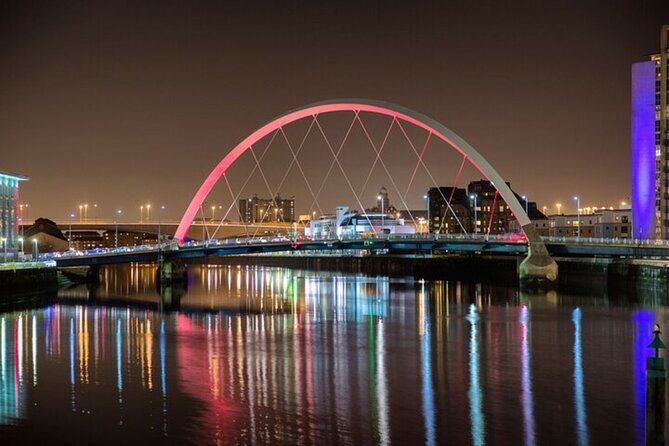
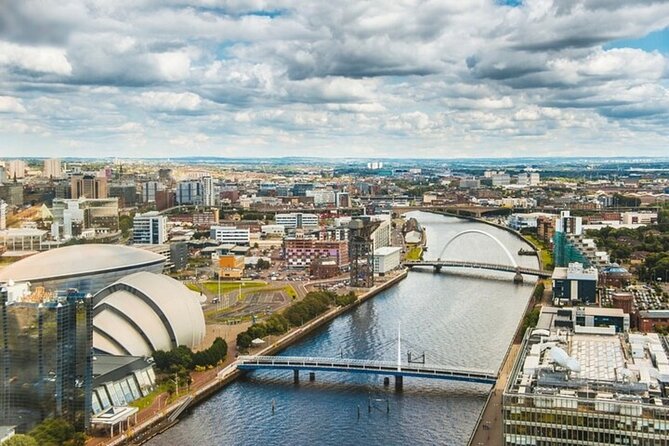
Following the River Clyde gives the tour room to breathe. You see bridges, waterfront development, and views toward the city, while your guide explains how the river shaped Glasgow’s growth.
The Clyde is more than a scenic break between buildings. It is a central part of Glasgow’s identity, and the waterfront helps you understand why the city developed where it did. The route also offers a different visual rhythm after the denser streets around Merchant City and the Necropolis.
This part may involve transport or a longer connecting walk, depending on the exact route used on the day. Any public transport cost is not included, so carry a valid way to pay. The tour information does not promise a fixed transport method, and the guide may adjust the route.
Buchanan Street adds shopping and people-watching
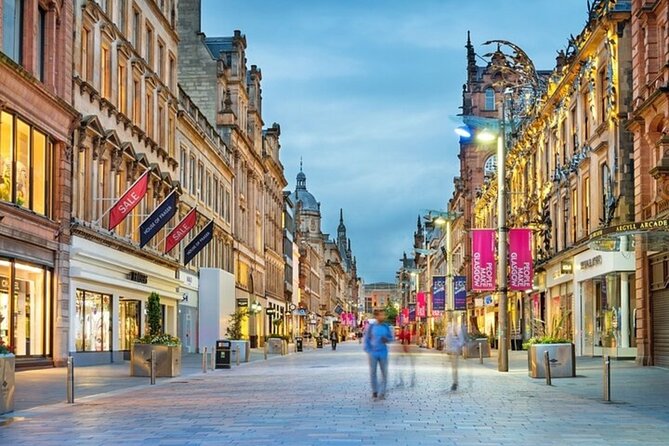
Buchanan Street is Glasgow’s main shopping thoroughfare, lined with department stores, cafés, and upscale shops. It is a lively place to observe the city rather than a historic monument in the usual sense.
This stop works well if you want practical time in the center. You can note places for lunch, shopping, or a later coffee. You probably will not have enough time to shop properly during the guided walk, so use the stop to get your bearings.
The contrast with the Necropolis and cathedral is useful. Glasgow is not presented as a museum frozen in the past. Its commercial center is active, social, and modern, and Buchanan Street makes that clear.
Glasgow Green completes the city circuit
Glasgow Green is the city’s oldest public park and gives the final part of the route a more open feel. Paths, monuments, lawns, and the nearby River Clyde provide a calmer setting than the central streets.
The park also links back to the People’s Palace and Winter Gardens, so this is not an isolated green space added at random. Together, the park and museum show how Glasgow’s public spaces served both recreation and civic life.
Because the tour returns to George Square, Glasgow Green is not necessarily the endpoint. The overall route covers a broad section of the city, and the final walk back may add to the day’s mileage. One visitor described the amount of walking as the main drawback. I would take that seriously, especially if you have already spent the morning sightseeing.
Guide quality is the real deciding factor
The strongest part of this experience is the guide. Keith MacKenzie is repeatedly praised for his local roots, storytelling, patience, and enthusiasm. He has also been described as helping with practical details, including waiting at the station to make sure a visitor caught the right train. His Spanish was praised as especially strong.
Other guides received warm comments for different reasons. Josh was appreciated for his energy and for growing up in the area. Gary was described as friendly and patient with questions. Roberta was praised for moving at the group’s pace and sharing useful tips. Chris brought local discussion and humor, while Noor offered strong architectural insight.
That said, preparation is not guaranteed to be equal across guides. Some people found the historical detail limited, while another private group felt their guide had not researched certain sites enough and was unfamiliar with closures or renovations. This is a useful warning: ask for a guide suited to your interests, and confirm any specific venue you hope to visit.
The tour is offered in English, Spanish, French, and Italian. If language matters to your enjoyment, request your preferred option when booking. The listed guide languages include all four, though a particular guide may not speak every language.
Is three hours enough?
Three hours can work well for an overview, but the itinerary is ambitious. Ten stops at roughly 18 minutes each would use the full three hours before counting the walking between them. In real life, you may spend longer at an important story and less time at a quick photo stop.
Several people found three hours passed quickly. That makes sense, especially when a guide is telling detailed stories. The tradeoff is clear: more explanation can mean fewer sights, while a faster pace can leave you seeing places without learning much about them.
I would not book this as your only Glasgow experience if you want full museum visits or detailed architecture. I would book it as a first-day framework, then return to the cathedral, People’s Palace, galleries, or other places that catch your attention.
Who will get the most from this tour?
I would recommend it to first-time visitors with a half-day available and an interest in seeing several parts of Glasgow without planning every turn themselves. It also suits people who enjoy asking questions and shaping a private walk around personal interests.
It is a good match for:
- Couples or families who want a private outing
- Small groups seeking a flexible city introduction
- Visitors interested in local stories and present-day Glasgow
- People who want to identify museums and neighborhoods for later visits
- Anyone comfortable walking for several hours
I would be more cautious if you have limited mobility, dislike hills or long walks, or want substantial time inside attractions. Most people can participate, but the route is still physically active, and transport costs are separate.
Price, booking, and cancellation advice
At $62.71 per person, the cost is fair only if the guide adds real substance. A private guide who adjusts the route, answers questions, and explains Glasgow’s past and present can make the price worthwhile. If the walk becomes a basic escort between landmarks, the value drops because the sights themselves are free to view from outside.
The tour is often booked well ahead, with an average booking lead time of 84 days. That suggests you should reserve early if your schedule is fixed or you want a particular guide, though the supplied details do not promise a guide by name.
You receive confirmation at booking, and the meeting point is near public transportation. Group discounts are available. Free cancellation applies when you cancel at least 24 hours before the start time. Changes or cancellations inside that window are not accepted for a refund.
Should you book the Glasgow Must-See Attractions Walking Tour?
Book it if you want a broad first look at Glasgow and value a personal guide more than long visits inside individual sights. I would especially consider it if you can request Keith MacKenzie, or if you have a clear interest in architecture, local life, shopping, or social history that the guide can build into the route.
Skip it if your main goal is detailed museum touring, a slow architectural study, or a low-effort sightseeing day. The route is long, the schedule is tight, and the experience depends strongly on who leads it.
For most first-time visitors, this works best as a city orientation with a human voice. Use the three hours to learn where Glasgow’s main pieces fit, then return on your own to the places that deserve more time.
FAQ
How long does the Glasgow walking tour last?
The tour lasts approximately three hours.
Where does the tour begin and end?
It begins at George Square in Glasgow, G1, and ends back at the meeting point.
Are museum and monument admissions included?
No. Entry to monuments and museums is not included, and the tour is primarily a city walk rather than an indoor tour.
Is transportation included?
No. If public transportation is used during the tour, you pay that cost yourself.
Is this a private tour?
A private option is available, and only your group participates in that format. A small-group option is also offered, with a minimum of two participants required.
What languages are available?
The tour is offered in English, Spanish, French, and Italian with an in-person guide.
Just added in Glasgow
- Stirling to Glasgow Luxury Car Transfer★ 5.0 · 1 review
- Day Tours & Shore Excursions Glasgow, Greenock & across Scotland★ 5.0 · 21 reviews
- Glasgow Greenock Shore Excursion Highland Lochs, Castles & Glens★ 5.0 · 6 reviews
- Glasgow Shore Excursions (Princess & Norwegian Cruise Ships)★ 5.0 · 2 reviews
- Glasgow; Glencoe, Oban & Highlands Private 11 Hour Tour★ 5.0 · 2 reviews
- Glasgow Luxury Private Day Tour with Scottish Local★ 5.0 · 2 reviews
- Glasgow Airport (GLA) to St Andrews Luxury Transfer★ 5.0 · 1 review
- Glasgow Airport to City Mercedes Minivan★ 5.0 · 1 review
Walking Tours, compared.
Underground Vaults Walking Tour in Edinburgh Old Town
Read our review →
Edinburgh Castle: Guided Walking Tour with Entry Ticket
Read our review →
Edinburgh Castle Guided Walking Tour in English
Read our review →
Edinburgh Darkside Walking Tour: Mysteries, Murder and Legends
Read our review →
Old Town Walking Tour History and Tales in Edinburgh
Read our review →
Haunted Vaults and Graveyard Walking Tour in Edinburgh
Read our review →Also on these Scottish lists