
Review · WALKING TOURS
Edinburgh: Dean Village & New Town Walking Tour
Edinburgh has a quieter side worth finding. This 2-hour-15-minute walk links the peaceful lanes of Dean Village with the grand streets of the New Town, giving you two very different views of the city in one outing. You move from medieval mills and baking history to Georgian squares, neoclassical buildings, public monuments, and stories about the Scottish Enlightenment.
I like the way the tour combines Dean Village and the New Town instead of treating them as separate sights. I also like its attention to people and ideas, from David Hume and Adam Smith to Arthur Conan Doyle, as well as its willingness to discuss colonial wealth and Edinburgh’s growth. The main consideration is pace: with 11 stops in just over two hours, you will see many places from the outside, but you will not have time for long interior visits.
The walk costs $27.37 per person and is limited to 20 people. That is a fair price for a small-group introduction to an area that many first-time visitors miss, especially if you have already spent time around the Old Town and Royal Mile. Guide Irene receives especially warm praise for making the walk friendly, clear, and fun, and one useful bonus is her local restaurant advice.
In This Review
- Key things to know before you book
- Why this walk gives you a fuller Edinburgh
- Dean Village: medieval mills beside the city center
- Charlotte Square and the Georgian House
- Rose Street and the story of secret bars
- Castle Street and Princes Street Gardens
- The Scott Monument and Edinburgh’s literary pride
- George Street, the Dome, and the New Town grid
- St. Andrew Square and the colonial story
- Price, group size, and overall value
- Who should book this Edinburgh walk?
- FAQ
- How long does the Dean Village and New Town tour last?
- How much does the tour cost?
- Where does the tour begin?
- Where does the tour end?
- What places are included in the route?
- Is admission to the attractions included?
- How many people can join the tour?
- Is the tour available with a mobile ticket?
- What happens if the weather is poor?
- Should you book it?
Key things to know before you book
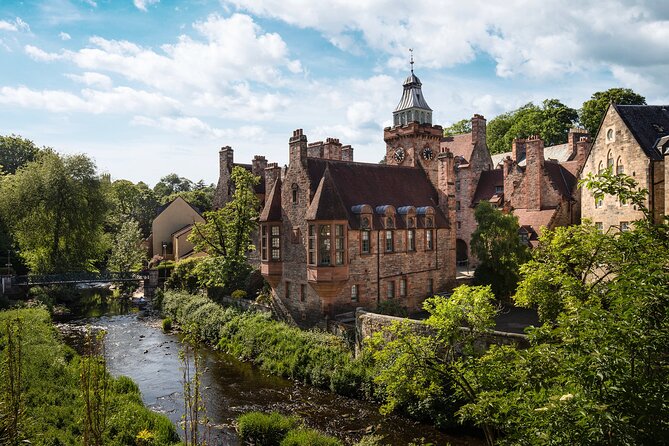
- Dean Village begins the walk: You start with a former medieval working district, including old mill stones and stone plaques decorated with bread and pies.
- The New Town is more than pretty streets: The tour explains the Scottish Enlightenment, Georgian society, neoclassical design, and the city’s connection to colonialism.
- You get excellent castle views: Castle Street and Princes Street Gardens provide several clear viewpoints toward Edinburgh Castle and Castle Rock.
- The route ends near St. Andrew Square: Dundas House is the final stop, close to the New Town’s eastern side and the Christmas market area mentioned in one tour experience.
- It is a walking and listening tour: Admission is free at every listed stop, but most commentary takes place outdoors and the schedule leaves little time for extended exploration.
- Weather matters: The experience can be canceled for poor weather, with a different date or full refund offered.
Why this walk gives you a fuller Edinburgh
Many Edinburgh tours focus on the Old Town, where the Royal Mile, closes, and castle dominate the view. This walk takes you in another direction. The New Town was planned with broad streets, open squares, and orderly blocks, a sharp contrast to the medieval lanes on the other side of Princes Street.
That contrast is one of the tour’s best features. You can see how Edinburgh changed from a crowded medieval city into an important center of science, philosophy, literature, commerce, and polite Georgian society.
The route also avoids a simple postcard version of the city. Alongside architecture and famous names, the guide discusses how colonialism contributed to Edinburgh’s expansion and wealth. That subject gives the grand squares more context. The elegant facades are worth seeing, but you also get a chance to ask who benefited from the city’s success and how that success was built.
The group size of up to 20 people is small enough for a guide to keep people together without turning the walk into a private tour. Since the tour lasts a little over two hours, it works well as an afternoon activity after visiting the Old Town, or as an early introduction to the New Town before exploring it on your own.
More Walking Tours in Edinburgh
- Underground Vaults Walking Tour in Edinburgh Old Town
★ 4.5 · 8,506 reviews - Edinburgh Castle: Guided Walking Tour with Entry Ticket
★ 5.0 · 5,540 reviews - Edinburgh Castle Guided Walking Tour in English
★ 5.0 · 5,214 reviews
Dean Village: medieval mills beside the city center
The walk begins at 2-4 Hope Street, a convenient point near central Edinburgh and public transportation. From there, you head toward Dean Village, which feels surprisingly quiet despite being only a short distance from Princes Street.
Dean Village was once a working industrial area built around the Water of Leith. Bakers and weavers lived and worked here, and water mills helped power local industry. The village’s older purpose is easy to miss if you only come for photographs, so the guide’s explanation adds real value.
Look for the remaining mill stones and the stone plaques decorated with baked bread and pies. These details connect the attractive buildings to the people who once made their living here. The village is not presented simply as a pretty corner of Edinburgh. You learn why it developed and how work shaped its streets.
The stop lasts about 30 minutes, the longest single pause on the route. That gives you time to take in the narrow streets and listen to the medieval and industrial background without feeling rushed.
There is one practical point to keep in mind. Dean Village is popular because it is photogenic, but this tour is not designed as a long photography session. If you want carefully framed pictures of every lane and building, return later with more time. Here, the goal is to understand the place before moving on.
Charlotte Square and the Georgian House
From Dean Village, the route continues toward Charlotte Square in the New Town. The change is immediate. Instead of small historic lanes and working buildings, you see planned space, formal architecture, and the confidence of Edinburgh’s Georgian expansion.
Charlotte Square helps explain the nickname Athens of the North. The phrase refers to the city’s intellectual life and classical architectural style, not just its handsome buildings. The guide connects the square to the Scottish Enlightenment, the period when Edinburgh became known for advances in philosophy, economics, science, and literature.
The stop at Charlotte Square lasts about 10 minutes. That is enough for an introduction, but not enough to explore every building in detail. Listen closely, because this is where the tour sets up much of what follows.
The Georgian House is the next stop, also for about 10 minutes. The tour remains outside the building rather than including entry to the National Trust for Scotland property. You learn what high-society life was like in 18th and 19th-century Edinburgh and how the New Town’s grand homes were planned for wealthier residents.
That outside-only format is both a benefit and a limitation. You get a clear explanation without paying an additional admission fee, and you can return independently if the house interests you. But if you want to see Georgian rooms, furnishings, and domestic details, you will need a separate visit.
I like this section because it makes the New Town feel lived in. The architecture is not just a collection of columns and symmetrical windows. It reflects social rank, changing ideas about urban planning, and the desire to create a modern, orderly city.
Rose Street and the story of secret bars
From Charlotte Square, you enter the New Town grid and follow Rose Street. Today, Rose Street is known for pubs, making it an easy place to pause for food or a drink after the tour.
The guide also explains why secret bars were established in the New Town. The story adds a more human note to the formal Georgian setting. Behind respectable facades and carefully planned streets, people still looked for private spaces where they could meet and drink away from public attention.
This stop lasts around 10 minutes. You will not be visiting a secret bar as part of the experience, but the explanation gives Rose Street more character than a quick walk through a busy restaurant district.
This is also one of the places where Irene’s practical advice may be useful. One experience specifically praised her restaurant suggestions, so you may want to ask about local places to eat before the walk ends.
A completely different kind of day out:
- The World Famous Underground Ghost Tour
★ 4.5 · 9,272 reviews - Loch Ness, Scottish Highlands, Glencoe and Pitlochry Tour
★ 5.0 · 6,854 reviews - Loch Ness & Highlands Small-Group Tour from Edinburgh with Cruise
★ 4.5 · 6,022 reviews - Edinburgh: Glenfinnan Viaduct, Glencoe & Fort William
★ 5.0 · 4,337 reviews
Castle Street and Princes Street Gardens
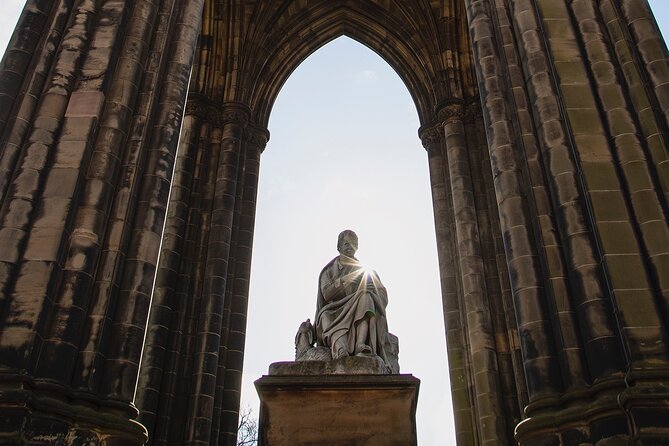
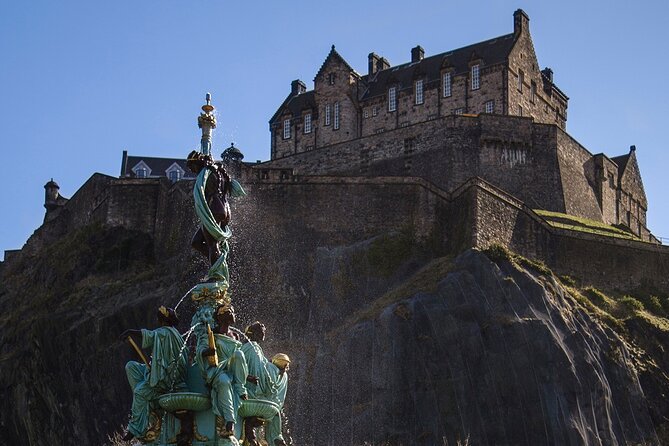
Castle Street provides a strong view toward Edinburgh Castle and Castle Rock. The sight is familiar, but the angle from the New Town helps you understand the city’s geography. The volcanic rock and castle rise above the more orderly streets, showing how closely Edinburgh’s medieval and Georgian sections fit together.
The tour pauses here for about 10 minutes. Since the castle itself is not part of this experience, you will not go inside or receive a full castle tour. This is a viewpoint and orientation stop, useful if you plan to visit the castle separately.
Next, you cross Princes Street and enter Princes Street Gardens. The gardens are one of Edinburgh’s main public parks, and the route pauses for about 15 minutes. You get another view of Castle Rock and the castle, along with examples of public art.
This is a welcome change from the hard lines of the New Town grid. The garden setting gives you room to look back at the city rather than simply walk past buildings. It also creates a natural break in the route.
The crossing of Princes Street deserves a little care. The itinerary includes crossing the street, and the walk continues through a public park, so comfortable footwear and attention to the group are sensible. The tour is not described as strenuous, but it is still a continuous city walk.
The Scott Monument and Edinburgh’s literary pride
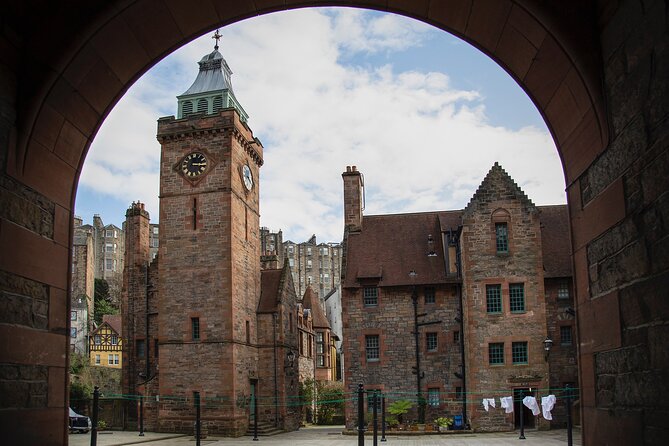
The next stop is the Scott Monument, one of Edinburgh’s most recognizable landmarks. It was built to honor Sir Walter Scott and is the largest monument in the world dedicated to a writer.
The guide discusses both the monument’s history and its architecture during a 15-minute stop. You will see the Gothic design from outside, but climbing the monument is not part of this tour.
The stop also fits the larger story of Edinburgh as a city of writers and thinkers. The walk connects the streets of the New Town with figures such as David Hume, Adam Smith, and Arthur Conan Doyle. Those names cover philosophy, economics, and literature, showing that Edinburgh’s intellectual reputation was not limited to one field.
If you are interested in literary Edinburgh, this part of the tour adds useful orientation. If you have already visited the monument and want to go inside, allow separate time before or after the walk.
George Street, the Dome, and the New Town grid
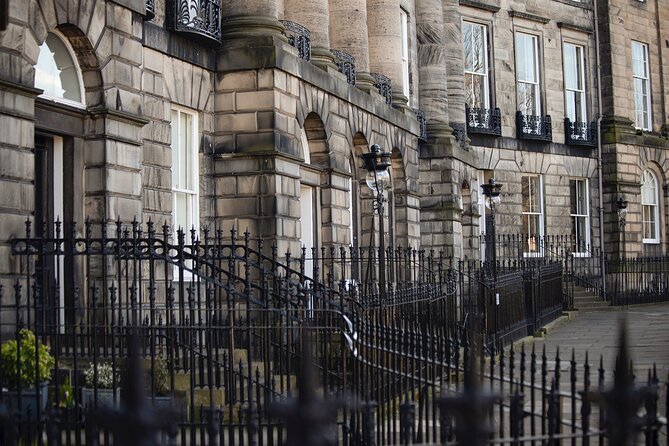
After Princes Street Gardens and the Scott Monument, the route returns to the New Town and follows the eastern part of George Street. This section is known for cafés, restaurants, statues, and formal buildings.
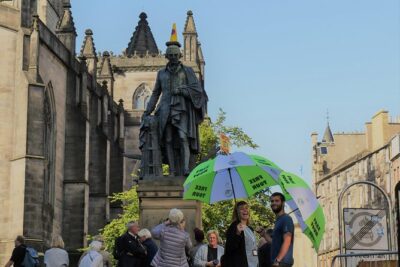
You will see statues dedicated to King George IV and James Clerk Maxwell. The guide uses these landmarks to explain people and ideas connected with Edinburgh, rather than simply pointing out names on pedestals.
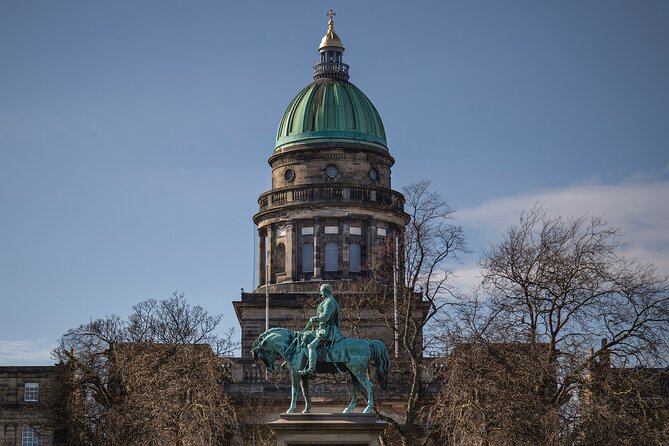
The walk then reaches the Dome, an impressive neoclassical building on George Street. The building is now associated with dining and polished interiors, but its exterior is the key focus here. The stop lasts about five minutes, so expect a quick explanation and time to look at the facade, not a meal or interior tour.
George Street is a good place to notice how the New Town works as a planned district. Broad streets, repeated architectural forms, and large buildings create a sense of order. The tour helps you see that design as a response to the cramped medieval city nearby.
You may find this portion less peaceful than Dean Village. George Street is lined with businesses and restaurants, and the setting feels more commercial. That is not a flaw, but it is a different kind of Edinburgh experience.
St. Andrew Square and the colonial story
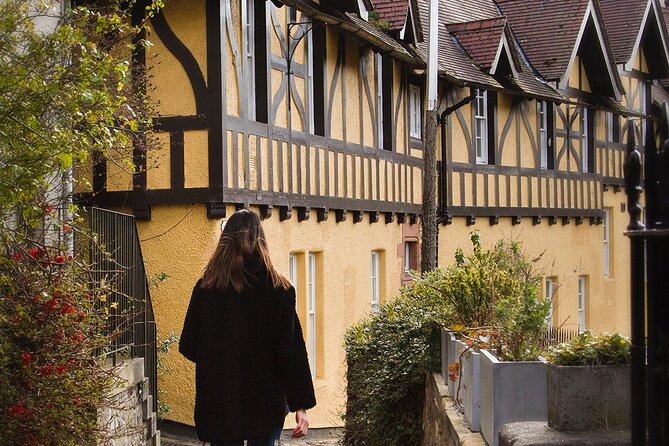
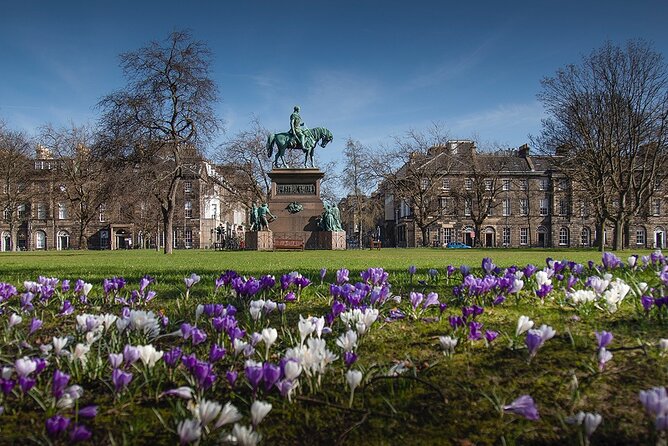
The last section takes you toward St. Andrew Square, where you see the Melville Monument in the center. The monument was built for Henry Dundas, Viscount Melville, and the guide explains its purpose and its connection to Britain’s colonial period.
This is an important part of the walk because it pushes beyond admiration for neoclassical buildings. Monuments can celebrate power, and the tour asks you to consider the political and imperial setting behind that power.
The stop lasts about 10 minutes. It is a useful place to hear how Edinburgh’s wealth and influence connected to wider British activity, including colonialism. If you prefer tours that avoid difficult subjects, this discussion may feel more serious than the architectural sections. I consider that a strength, especially when the topic is handled alongside the city’s growth and public monuments.
Across the street is Dundas House, the final stop. The building was designed with inspiration from the work of Italian Renaissance architect Andrea Palladio. Today it is a bank, and the group may enter if the building is open.
Because entry depends on access at the time, do not treat this as a guaranteed interior visit. The tour ends outside Dundas House in St. Andrew Square, giving you a useful position for continuing into the New Town.
Price, group size, and overall value
At $27.37 per person, this is a reasonably priced guided walk. Every listed stop has free admission, so the fee pays for the guide’s route planning, explanations, local context, and help connecting places that you could visit independently.
The value is strongest if you want more than directions and photographs. Dean Village is easy to reach on your own, and you can walk through the New Town without a guide. But understanding the medieval mills, Georgian social life, Scottish Enlightenment, secret bars, public monuments, and colonial connections in one route takes careful preparation.
The tour is usually booked 118 days in advance, which suggests you should plan ahead during popular periods. A mobile ticket keeps the arrangement simple, and confirmation arrives at booking.
The experience has a maximum of 20 people. That is not a private group, but it is more manageable than a large coach excursion. Most people can take part, service animals are allowed, and the meeting point is near public transportation.
The main limitation is the lack of included admissions. The Georgian House, Scott Monument, Edinburgh Castle, and other interiors are not part of the tour. Think of this as a guided outdoor overview that helps you decide what deserves a longer visit.
Free cancellation is available until 24 hours before the start time. Changes or cancellations inside that window are not accepted for a refund. The tour requires good weather and a minimum number of participants, so a cancellation by the operator can lead to a new date or a full refund.
Who should book this Edinburgh walk?
I would choose this tour if you have already seen the Old Town and want a different side of Edinburgh. It also suits first-time visitors who want a clear introduction to the New Town before exploring its streets, shops, restaurants, and museums independently.
The walk is especially useful for you if you enjoy:
- Georgian and neoclassical architecture
- Edinburgh’s intellectual and literary connections
- Small historic neighborhoods
- City viewpoints and public monuments
- Tours that address colonial history directly
- Local food suggestions from a guide
You may want a different experience if you prefer long interior visits, extensive free time, or a tour focused mainly on Edinburgh Castle. The schedule is purposeful and fairly full, with many short stops.
I also like that the route ends in the New Town rather than returning to the starting point. That leaves you near St. Andrew Square, and one account placed the end close to the Christmas markets. You can continue exploring instead of retracing the entire walk.
FAQ
How long does the Dean Village and New Town tour last?
The tour lasts approximately 2 hours and 15 minutes.
How much does the tour cost?
The listed price is $27.37 per person.
Where does the tour begin?
It begins at 2-4 Hope Street, Edinburgh EH2 4DB, UK.
Where does the tour end?
The tour ends outside Dundas House in St. Andrew Square, Edinburgh EH2 2YB.
What places are included in the route?
The route includes Dean Village, Charlotte Square, the Georgian House exterior, Rose Street, Castle Street, Princes Street Gardens, the Scott Monument, George Street, the Dome, the Melville Monument, and Dundas House.
Is admission to the attractions included?
The listed stops have free admission, but the tour does not include guaranteed entry to interiors. Dundas House may be entered if it is open.
How many people can join the tour?
The maximum group size is 20 people.
Is the tour available with a mobile ticket?
Yes. A mobile ticket is provided, and confirmation is received when you book.
What happens if the weather is poor?
The experience may be canceled because it requires good weather. You will be offered a different date or a full refund.
Should you book it?
Book this walk if you want Edinburgh beyond the Royal Mile. For $27.37, you get a well-shaped route through two contrasting parts of the city, thoughtful architecture commentary, castle views, and a look at the people and political forces behind Edinburgh’s rise.
The best reason to choose it is the combination of Dean Village’s old working character with the New Town’s Georgian order. Add Irene’s friendly guiding style and useful restaurant suggestions, and the tour becomes a practical way to get your bearings in a less familiar part of Edinburgh.
Skip it only if you need substantial time inside museums and historic houses. For an outdoor introduction, a small group, and a more complete picture of Edinburgh’s past, this is a smart two-hour investment.
Just added in Edinburgh
- Full Day Sailing Trip★ 5.0 · 10 reviews
- Half Day Sailing Trip★ 5.0 · 11 reviews
- Blackness Castle Cruise★ 4.5 · 39 reviews
- Private South Queensferry Town Walking Tour★ 5.0 · 3 reviews
- Scottish Highland Day Tour from Edinburgh★ 5.0 · 2 reviews
- Edinburgh Shore Excursion: City Tour and Royal Yacht Britannia★ 4.0 · 41 reviews
- Edinburgh Shore Excursion with a Local Guide: 100% Personalized & Private★ 4.0 · 7 reviews
- Private Highland Whisky, Stirling Castle and Linlithgow Palace Tour – Edinburgh★ 5.0 · 1 review
Walking Tours, compared.
Underground Vaults Walking Tour in Edinburgh Old Town
Read our review →
Edinburgh Castle: Guided Walking Tour with Entry Ticket
Read our review →
Edinburgh Castle Guided Walking Tour in English
Read our review →
Edinburgh Darkside Walking Tour: Mysteries, Murder and Legends
Read our review →
Old Town Walking Tour History and Tales in Edinburgh
Read our review →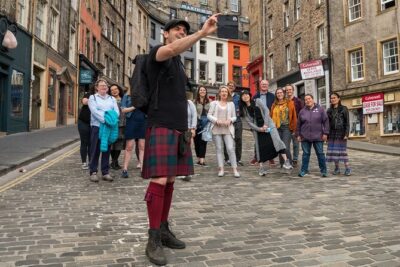
Haunted Vaults and Graveyard Walking Tour in Edinburgh
Read our review →Also on these Scottish lists