
Review · ABERDEEN TOURS
Aberdeen’s Ancient Heritage and Folklore
Scotland’s oldest stories still sit beneath your feet. This seven-and-a-half-hour trip from Aberdeen reaches Pictish forts, carved stones, a stone circle, and quiet corners of Aberdeenshire that most visitors miss. I especially like the small maximum group of seven and the chance to hear local folklore from Jacqueline, whose flexible style can turn the day into a more personal outing. I also like that the route links archaeology with the scenery around it, rather than treating old stones as isolated photo stops.
The main thing to consider is the walking. Barra Hill and Dunnideer require uphill sections, and walking poles may be useful. The tour is not recommended if you have mobility issues, although some adjustments can be made if you discuss your needs before booking.
In This Review
- Key things to know before booking
- Why this small-group outing feels different
- Barra Hill and the first look at Pictish life
- Dunnideer’s five rings and medieval castle ruin
- Rhynie, carved stones, and the scale of Pictish power
- A riverside lunch near Bellabeg
- Tomnaverie and northeast Scotland’s recumbent circles
- What the $135.49 price includes
- Walking, weather, and practical comfort
- Folklore, local stories, and the guide’s role
- Who should book this Aberdeen day trip?
- Should you book Aberdeen’s Ancient Heritage and Folklore?
- FAQ
- Where does the tour begin and end?
- What time does the tour start?
- How long does the experience last?
- What is the maximum group size?
- Is lunch included?
- Is walking required?
- What happens if bad weather cancels the tour?
Key things to know before booking
- Pictish history takes center stage: Learn about the people who lived in northeast Scotland before their culture helped shape the Kingdom of Alba.
- Seven-person maximum: A small group makes it easier to ask questions and request reasonable changes to the day.
- Five very different stops: Expect hillforts, a castle ruin, carved stones, a riverside lunch break, and a 4,500-year-old burial cairn.
- Jacqueline’s personal approach: She has adjusted outings around individual interests, with past additions including a sea cliff, puffins, a whisky brewery, and a castle.
- Bring lunch and sensible shoes: Lunch is not included, and some of the hill paths are steep or uneven.
- A full day beyond Aberdeen: The tour begins at 9:00 a.m. at the William Wallace Statue and returns there at the end.
Why this small-group outing feels different
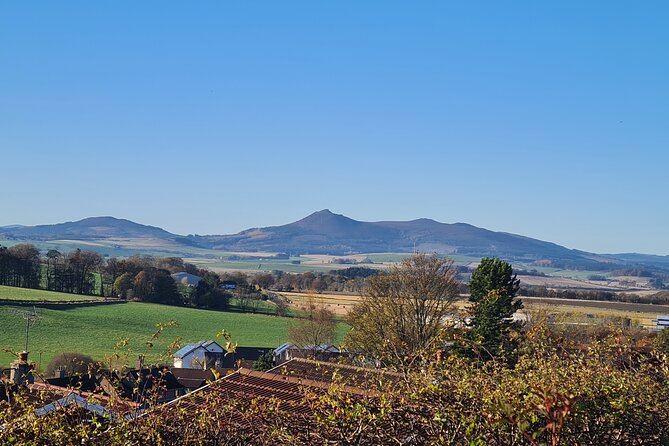
This is not a standard Aberdeen highlights tour. You will leave the city and spend the day among low hills, open countryside, old stones, and the remains of settlements that predate many of Scotland’s better-known castles.
I like the way the experience connects several layers of time. At Barra Hill, you consider an early fortified community. At Dunnideer, you see a medieval tower house built partly from an older hillfort. At Rhynie, carved stones point toward Pictish power and trade. Tomnaverie then takes you much farther back, to a stone circle and burial cairn dating to about 4,500 years ago.
That range gives the day a useful shape. You are not simply looking at ruins. You are seeing how different communities used the same hills across thousands of years.
The group limit of seven matters here. Sites such as these are not always self-explanatory, and a crowded coach would make quiet discussion difficult. With a small party, you can ask about a symbol, stop for a closer look, or talk through the competing ideas about why a monument was built.
Jacqueline’s style is another strong point. The available experience details show that she has adapted the day around personal interests, including extra stops for a sea view with seabirds and puffins, a whisky brewery, and a castle. Those additions are not guaranteed, but they show that you can raise your interests before or during the outing.
The tradeoff is that flexibility can make the day less predictable. If you want a tightly timed program with every minute fixed, this may feel informal. If you prefer a guide who can respond to the group, that is part of the appeal.
More Aberdeen trips:
- Aberdeen City Centre Walking Tour (2pm)
★ 5.0 · 217 reviews - Dunnottar Castle and Royal Deeside Small-Group Tour from Aberdeen
★ 5.0 · 196 reviews - Loch Ness and the Highlands Small-Group Day Tour from Aberdeen
★ 5.0 · 164 reviews
Barra Hill and the first look at Pictish life
The day begins at Barra Hill fort, one of the more accessible hillfort sites in the area. These forts were built on higher ground, often with wooden or stone enclosures. They were not just defensive positions. They could contain settlements where people lived and worked.
Today, only foundations and earthworks remain. That means you will need to use your imagination, but the raised position helps you understand why communities chose these sites. From above, you can consider the practical benefits of visibility and protection.
This first stop also introduces a useful warning about ancient sites in Scotland. Archaeologists are still learning how these settlements functioned. You will hear about what is known, but the evidence does not answer every question.
The stop lasts about an hour and has no separate admission charge. The walk can be demanding for some people, so wear shoes with a firm grip and bring walking poles if you use them. The tour can make adjustments for people who do not want to take part in all the walking, but you should contact the provider before booking rather than assume every hill can be avoided.
Dunnideer’s five rings and medieval castle ruin
Dunnideer offers a compact lesson in how one site can carry several periods of history. You make a short walk up a low hill to see Dunnideer Castle, a tower house built around 1260. Part of the castle used material from an older vitrified hillfort at the same spot.
The earlier fort is formed by at least five concentric rings of banks and ditches. From below and from the hilltop, these defenses are easier to read than many faint earthworks. You can see the outline of a place that was planned and protected long before the medieval tower appeared.
The remaining stones of Dunnideer Stone Circle add another layer. They are close to the hillfort and castle, so a brief visit brings together prehistoric ceremony, Iron Age defense, and medieval power.
You have about 30 minutes here. That is enough to appreciate the setting, but not enough for a long independent walk. I would treat this as a focused stop rather than a place to wander at length.
Rhynie, carved stones, and the scale of Pictish power
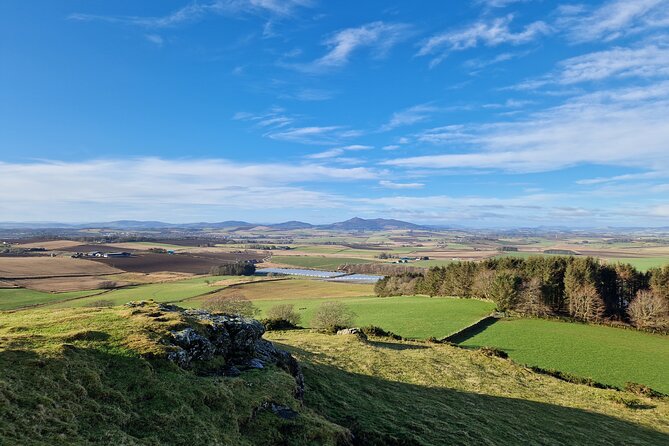
Rhynie is the intellectual heart of the day. The area was a Pictish stronghold, and the nearby Tap O’ Noth has Scotland’s largest hillfort. Its summit settlement may once have held more than 5,000 people, a remarkable figure for a post-Roman community.
That number changes how you picture the Picts. They are often reduced to mysterious symbols on stones, but a settlement of this scale suggests organization, trade, status, and a substantial population. The site also challenges the old idea that the centuries after Rome were simply a period of decline.
At Rhynie, you will examine a collection of carved Pictish stones and learn how to think about their symbols. The carvings can be striking, but their precise meanings are not always certain. A good guide should separate evidence from theory, and this is where Jacqueline’s storytelling approach is especially useful.
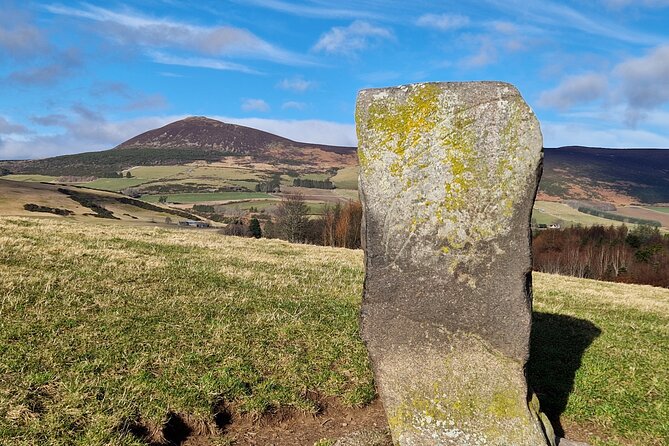
The Crawstane is a lone standing stone that once sat at the center of a settlement. It is linked with trade reaching as far as the Mediterranean and with considerable wealth. That detail gives the site an international dimension. These communities were not cut off from the wider world.
You will also hear about the King of the Scots and the changes that reshaped Scotland’s culture. Those changes eventually contributed to the decline of Pictish identity. This is one of the most valuable parts of the day because it moves beyond symbols and ruins to ask how political power and cultural change affect ordinary communities.
Allow about an hour at Rhynie. This is the place where questions are most welcome, so use the small group to ask about the symbols, the settlement, and the evidence behind the larger claims.
More History Tours in Aberdeen:
- Aberdeenshire Private Half Day Castle & Historic Building Tour
★ 5.0 · 18 reviews - Aberdeen Historical Walking Tour
★ 5.0 · 13 reviews - Private Full Day History and Nature Tour from Aberdeen
★ 5.0 · 1 review - Art, History, and Hidden Gems: Aberdeen Private Walking Tour
★ 5.0 · 1 review
A riverside lunch near Bellabeg
The lunch break takes place around Bellabeg, at the foot of the Doune of Invernochty motte and bailey castle. The village is in Cairngorm National Park and provides a slower pause between the archaeological stops.
Lunch is not included. You can buy food in Insch or Bellabeg, or bring a picnic. A cooler is provided, which is useful if you pick up supplies early or want to keep drinks and food fresh.
You have about 45 minutes. I would bring a picnic if you like choosing exactly what you eat, since the break is short and the day is spent in rural areas. The river and country lanes offer a pleasant change of pace, but this is not a full restaurant stop or a long village visit.
This pause also helps the day’s rhythm. Seven hours and 30 minutes is a long outing, and ancient sites require attention. A short meal break gives you time to reset before the final stone circle.
Tomnaverie and northeast Scotland’s recumbent circles
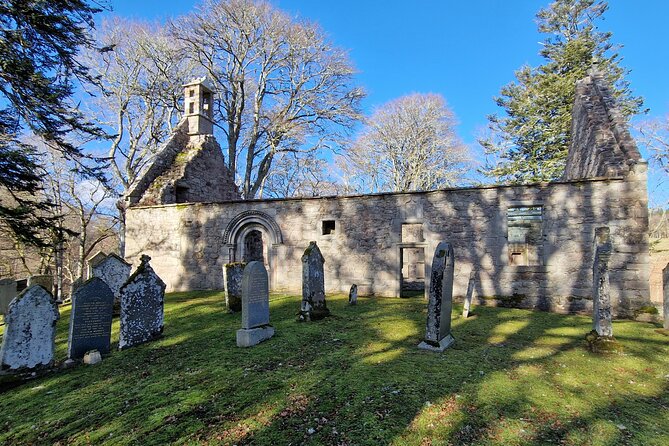
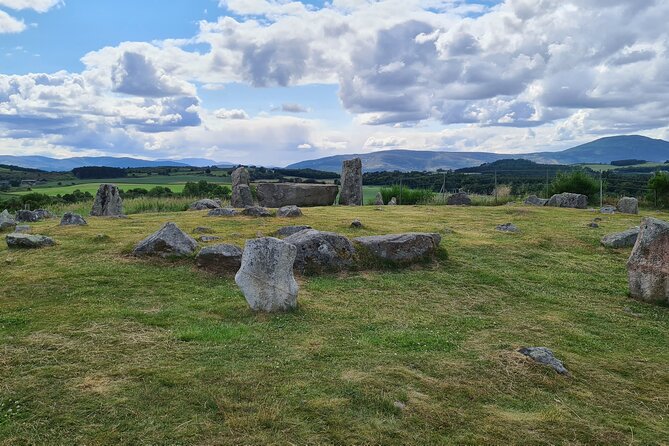
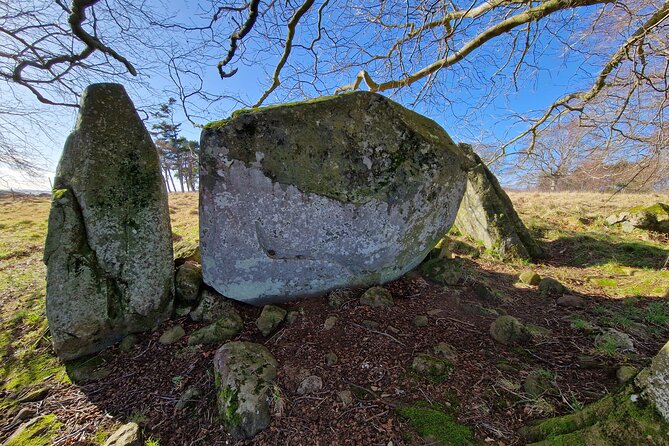
Tomnaverie is one of the most distinctive stops. It is a recumbent stone circle, a type found only in northeast Scotland. Its defining feature is a large stone laid on its side, flanked by two upright stones, with additional standing stones completing the circle.
The monument sits near a burial cairn dated to about 4,500 years ago. That date places the site far earlier than the Pictish period, reminding you that the region’s sacred places were already ancient when the Picts arrived.
No single explanation fully accounts for these circles. You will hear several theories about their purpose, which is more honest and more interesting than pretending the original meaning is certain. The surrounding views also make this a strong final stop, especially after the denser discussion at Rhynie.
The visit lasts about 30 minutes. Bring a waterproof layer if the forecast is uncertain, since the site is outdoors and the tour depends on good weather. The provider offers another date or a full refund if poor weather forces cancellation.
What the $135.49 price includes
At $135.49 per person, this is not a cheap way to fill a few hours. It is a full-day private-feeling excursion with transport, onboard WiFi, guiding, and access to several free heritage sites.
The value depends on how much you want from a guide. If you only need a vehicle to reach the sites, the price may feel high. If you want the connections between Pictish symbols, hillfort construction, medieval reuse, prehistoric burial, and local folklore explained as you go, the cost becomes easier to justify.
The maximum of seven is important to the value. You are paying for a small group rather than a large coach experience, and the day can be more responsive. Past outings have also been customized around requests, though you should not book assuming that every extra stop will be added.
You will need to budget separately for lunch. Bring your own food or buy it in Insch or Bellabeg. Since admission is free at the listed stops, most of your fee goes toward the vehicle, time, guide, planning, and access to rural sites that are difficult to combine independently in one day.
The tour is commonly booked about 64 days ahead. That suggests you should reserve early if your Aberdeen dates are fixed, especially if you want a particular day.
Walking, weather, and practical comfort
The experience calls for moderate physical fitness. Barra Hill and Dunnideer include uphill walking, with some steep sections. The tour is not recommended for people with mobility issues, but the provider says that non-walking guests are not expected to take every hill and that adjustments may be possible.
Bring:
- Comfortable shoes with good grip
- A waterproof jacket
- Walking poles if you use them
- Packed lunch or money for food in Insch or Bellabeg
- Water and any personal items you need during a full day out
Service animals are allowed, and the starting point is near public transportation. The meeting point is the William Wallace Statue on Union Terrace in Aberdeen. Start time is 9:00 a.m., and you return to the same point at the end.
The mobile ticket is convenient, but the more important detail is the rural nature of the day. You are not moving between polished visitor centers. Expect outdoor stops, exposed hills, earthworks, and monuments with limited on-site interpretation.
Folklore, local stories, and the guide’s role
The folklore element gives the tour its character. Pictish symbols and prehistoric monuments can feel remote when viewed without context. Stories about beliefs, kings, settlement, and cultural change give you a way to connect the stones with the people who used them.
Jacqueline receives particularly strong praise for making the day personal and exciting. She has taken time to accommodate individual requests and has shared local sites beyond the main heritage focus. That may include a cliff above the sea, seabirds and puffins, a whisky brewery, or a castle, depending on the day and the group.
I would contact the provider before booking if you have a specific interest. Ask about folklore, carved stones, wildlife, whisky, castles, or photography. The more clearly you explain what you want, the more useful the flexible format may be.
The four available ratings are all five out of five, with repeated praise for Jacqueline’s personal attention and for access to non-tourist sites. That is a small sample, so I would not treat it as proof that every outing will be perfect. Still, the praise is consistent on the points that matter most here: her flexibility, local storytelling, and ability to make the day feel made for the people in the vehicle.
Who should book this Aberdeen day trip?
I would recommend it to you if you enjoy:
- Ancient sites without polished visitor facilities
- Pictish symbols, hillforts, and Scottish folklore
- Small groups and direct contact with a guide
- Rural scenery and quiet country stops
- A full day away from central Aberdeen
- Flexible touring rather than a rigid schedule
It is less suitable if you want easy access, long indoor visits, a short excursion, or a guaranteed restaurant lunch. It may also disappoint if your main interest is Aberdeen’s city architecture, since the day quickly moves into Aberdeenshire.
Families with older children who enjoy stories and outdoor exploring may find it rewarding. People who dislike uneven ground or cannot manage short steep climbs should ask about adjustments before paying.
Should you book Aberdeen’s Ancient Heritage and Folklore?
Book this tour if you want context, conversation, and places that sit outside the usual Scotland circuit. The strongest reasons are the small group, Jacqueline’s willingness to personalize the day, and the unusual mix of Pictish, medieval, and prehistoric sites.
I would skip it if you want a low-effort sightseeing day or if the $135.49 price feels too high once lunch and preparation are added. For the right person, though, the experience offers something difficult to arrange alone: five remote heritage stops, a guide who can connect the evidence with local stories, and a full day in the quieter parts of Aberdeenshire.
FAQ
Where does the tour begin and end?
It begins at the William Wallace Statue on Union Terrace, Aberdeen AB10 1NP. The tour ends back at the same meeting point.
What time does the tour start?
The start time is 9:00 a.m.
How long does the experience last?
The tour lasts approximately seven hours and 30 minutes.
What is the maximum group size?
The tour has a maximum of seven travelers.
Is lunch included?
No. You can buy lunch in Insch or Bellabeg, or bring a picnic. A cooler is provided.
Is walking required?
The tour includes hill sections at Barra Hill and Dunnideer, including some steep parts. Moderate physical fitness is advised, and walking poles may help. Adjustments may be possible for people who do not take part in all the walking.
What happens if bad weather cancels the tour?
The experience requires good weather. If it is canceled because of poor weather, you will be offered a different date or a full refund. You can also cancel for a full refund if you do so at least 24 hours before the start time.
Just added in Aberdeen
- Speyside Whisky Trail Day Tour from Aberdeen Including Admissions★ 4.5 · 34 reviews
- Private Balmoral Glamis Dunnottar Castles Tour from Aberdeen★ 5.0 · 3 reviews
- St Andrews and Dundee Small-Group Tour from Aberdeen★ 5.0 · 11 reviews
- Aberdeen Tour App, Hidden Gems Game and Big Britain Quiz (1 Day Pass) UK★ 5.0 · 1 review
- Coastal Villages of Aberdeenshire★ 5.0 · 64 reviews
- The Dark Side of Aberdeen: A Self-guided Audio Walk★ 4.0 · 21 reviews
- Private Aberdeen Street Art Tour★ 5.0 · 1 review
- Aberdeen Historical Walking Tour★ 5.0 · 13 reviews
Aberdeen Tours, compared.
Dunnottar Castle and Royal Deeside Small-Group Tour from Aberdeen
Read our review →
Loch Ness and the Highlands Small-Group Day Tour from Aberdeen
Read our review →
North East Coastal Trail Small Group Day Tour from Aberdeen
Read our review →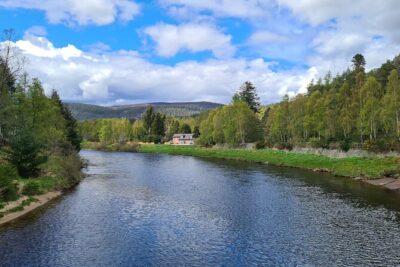
Speyside Whisky Trail Day Tour from Aberdeen Including Admissions
Read our review →Also on these Scottish lists